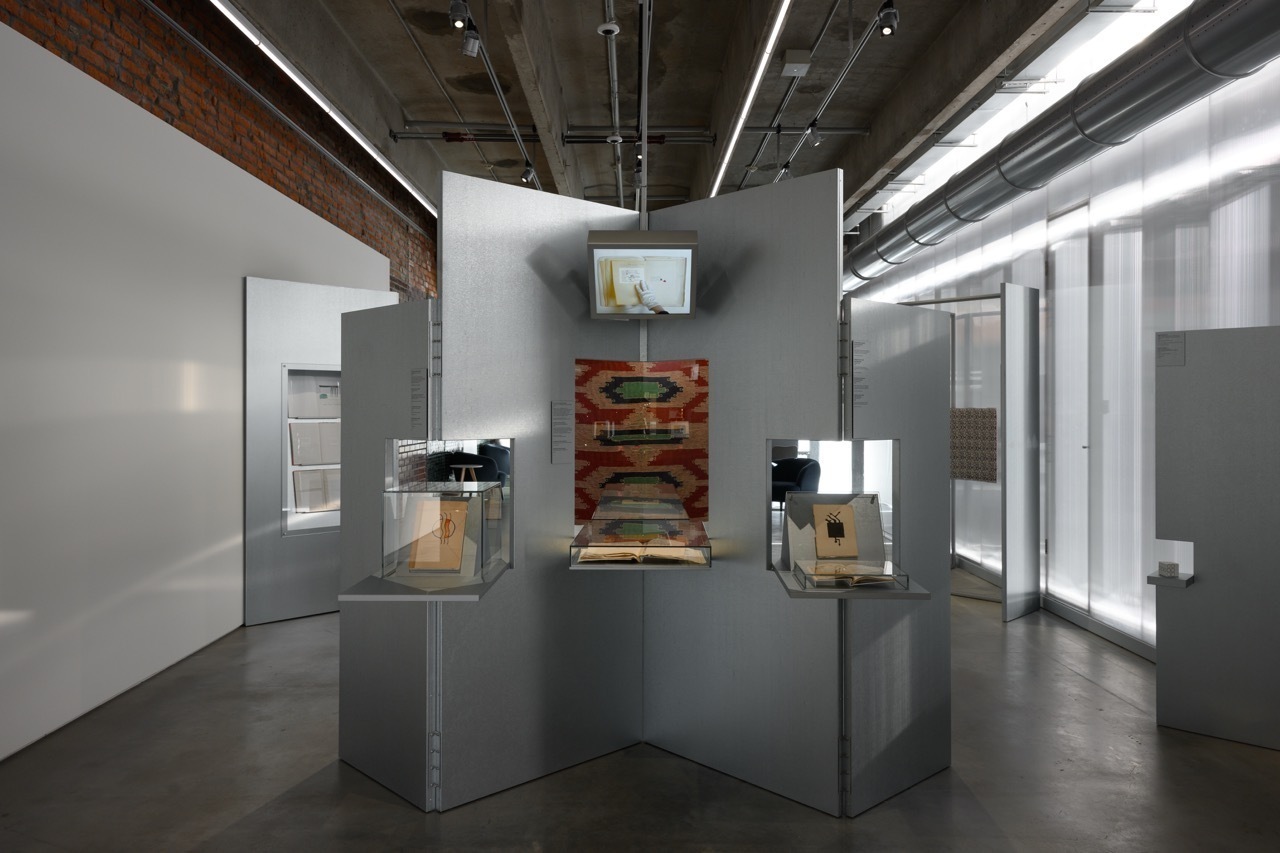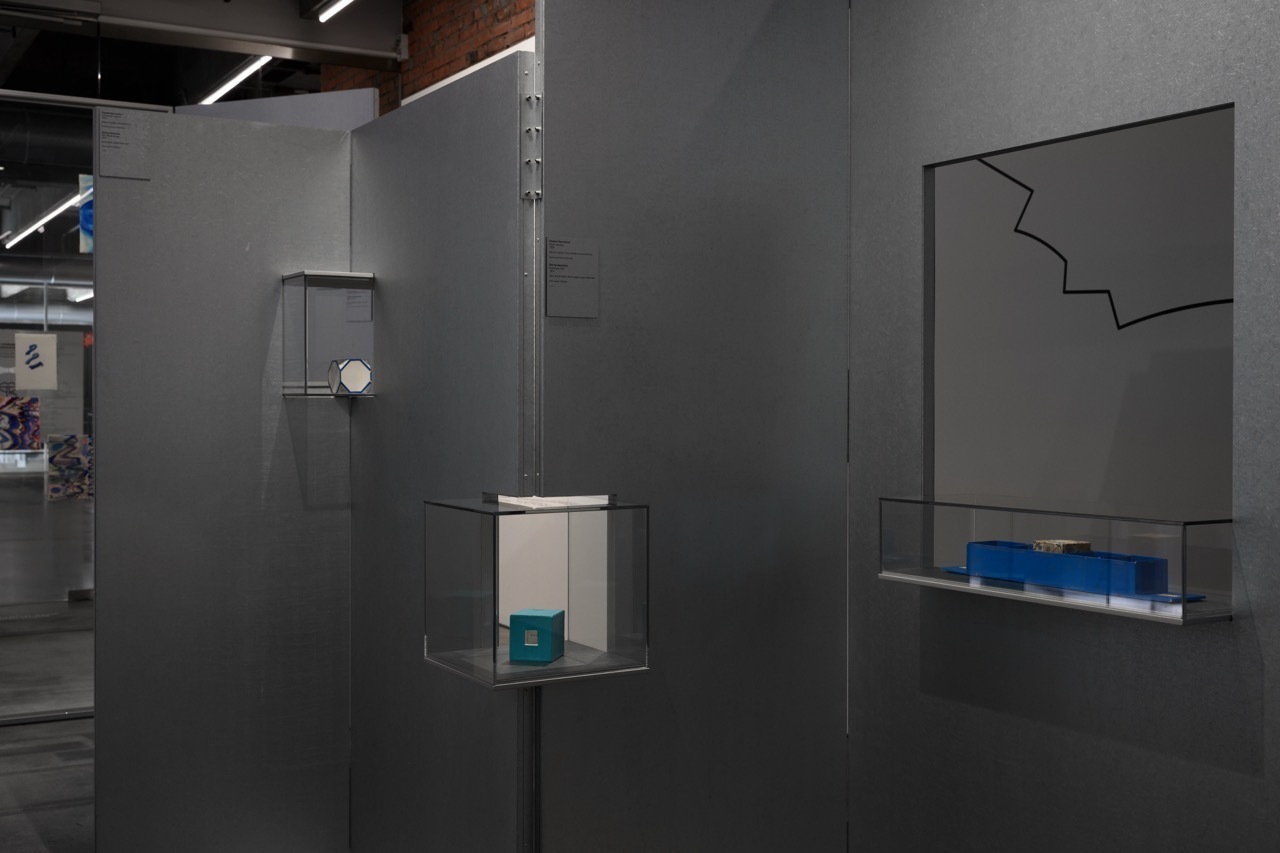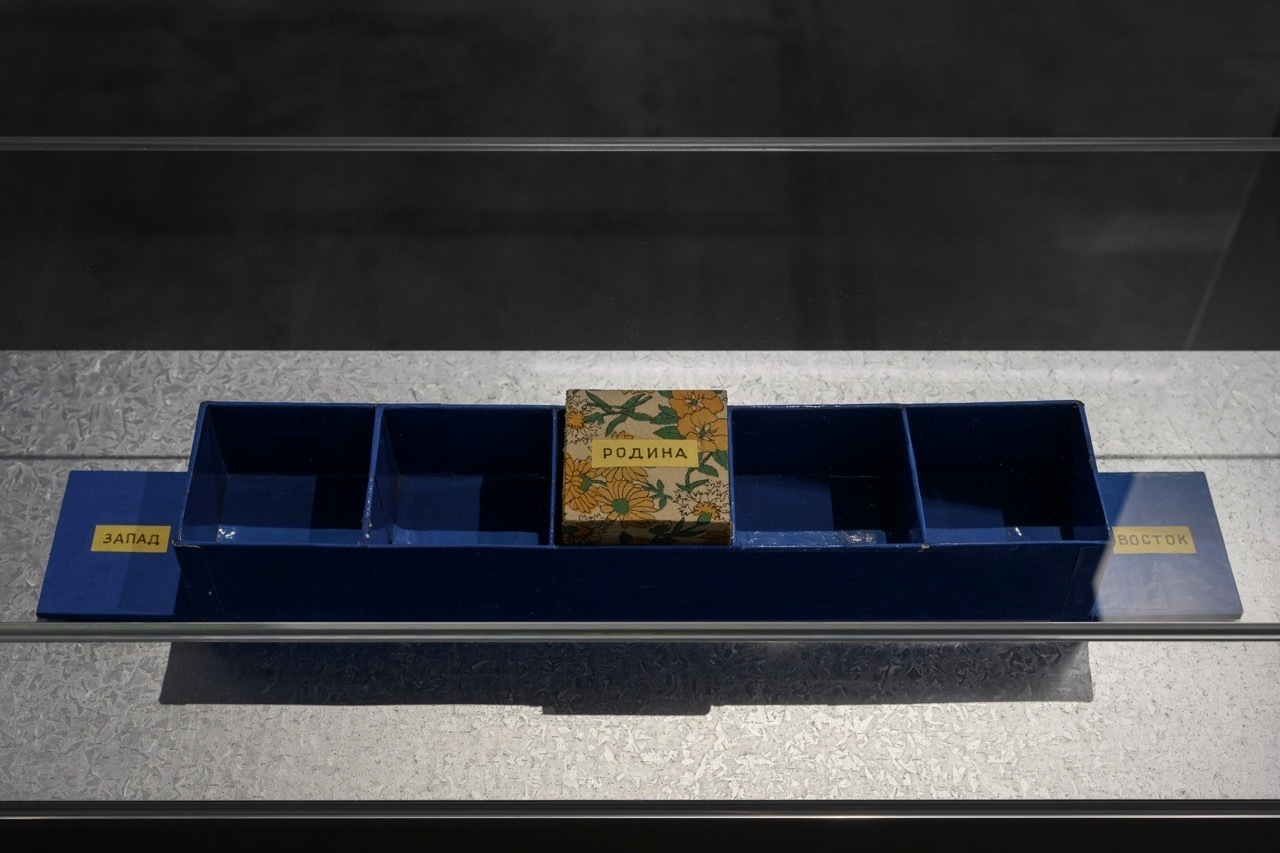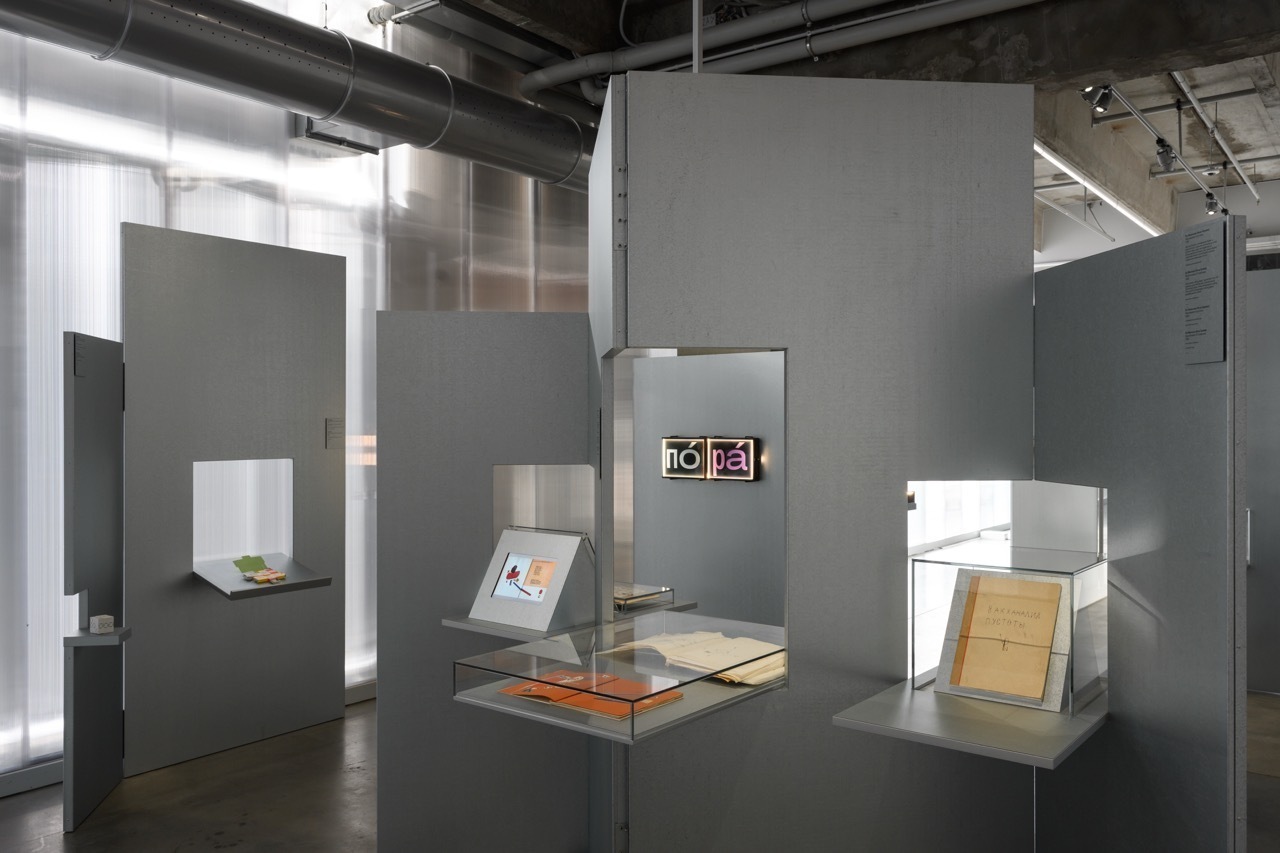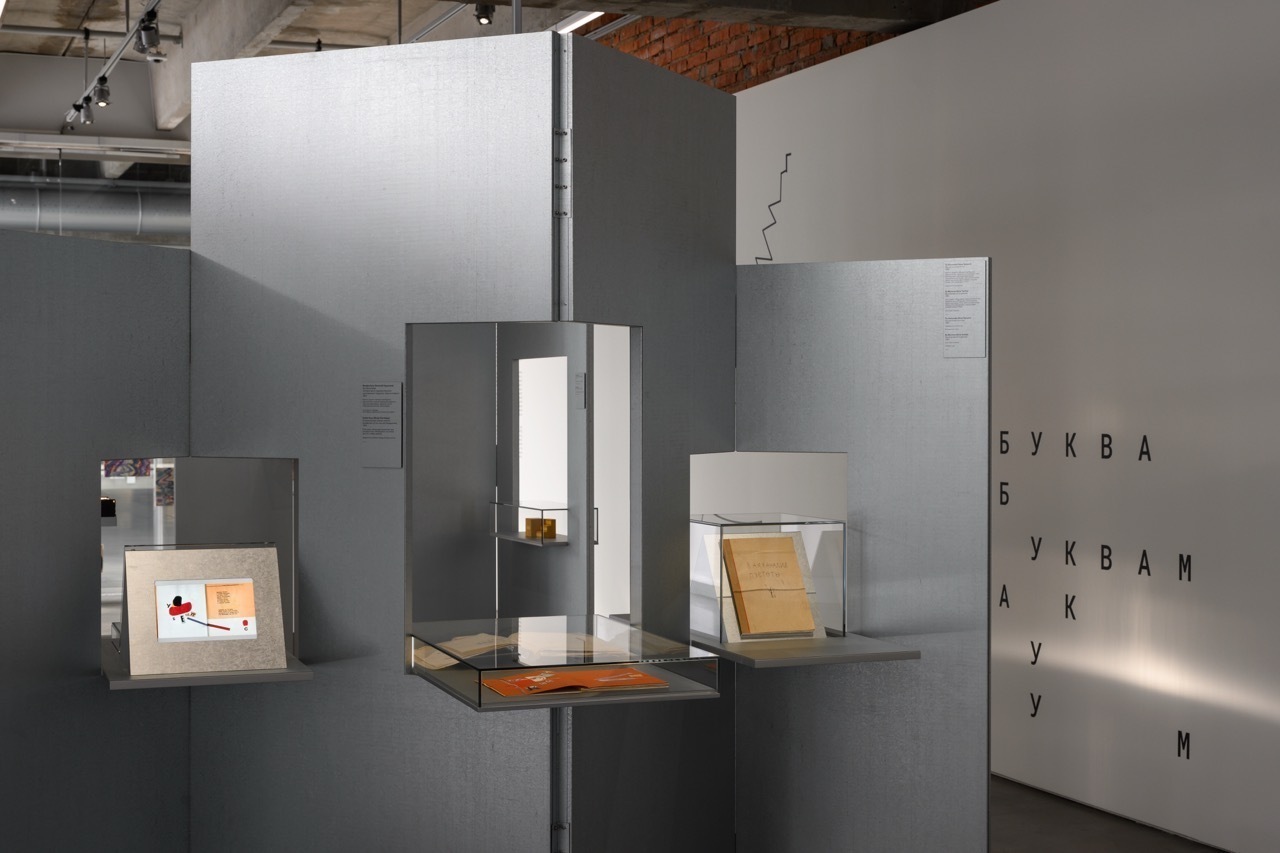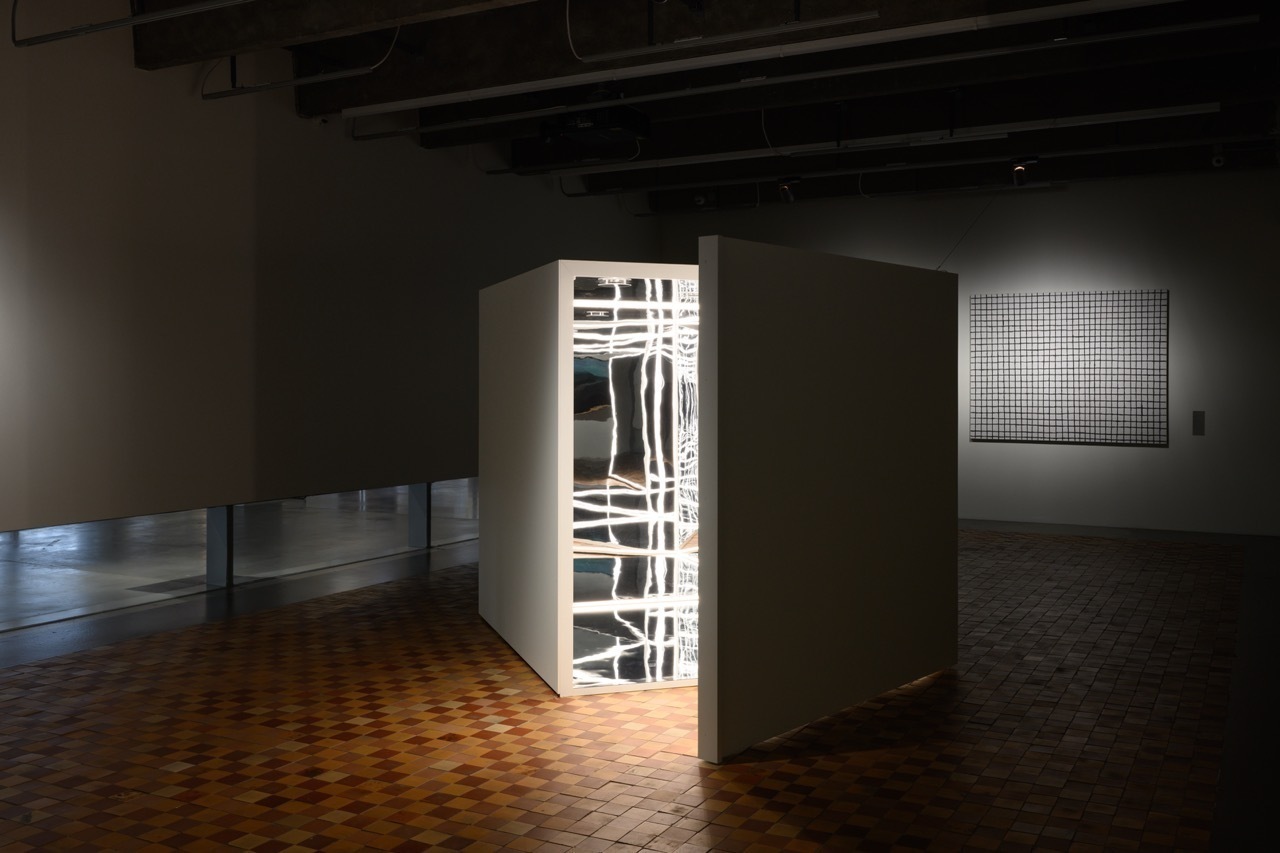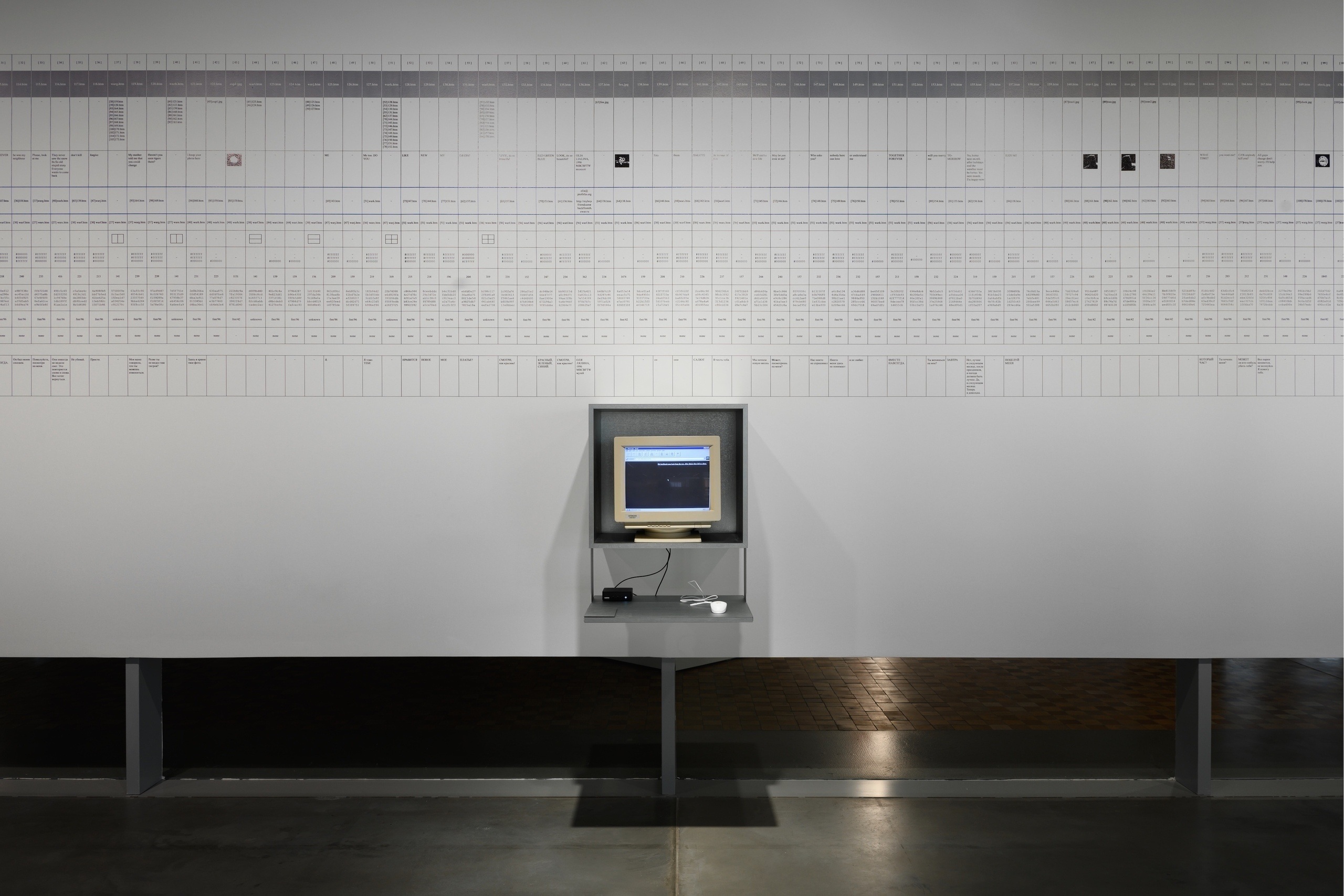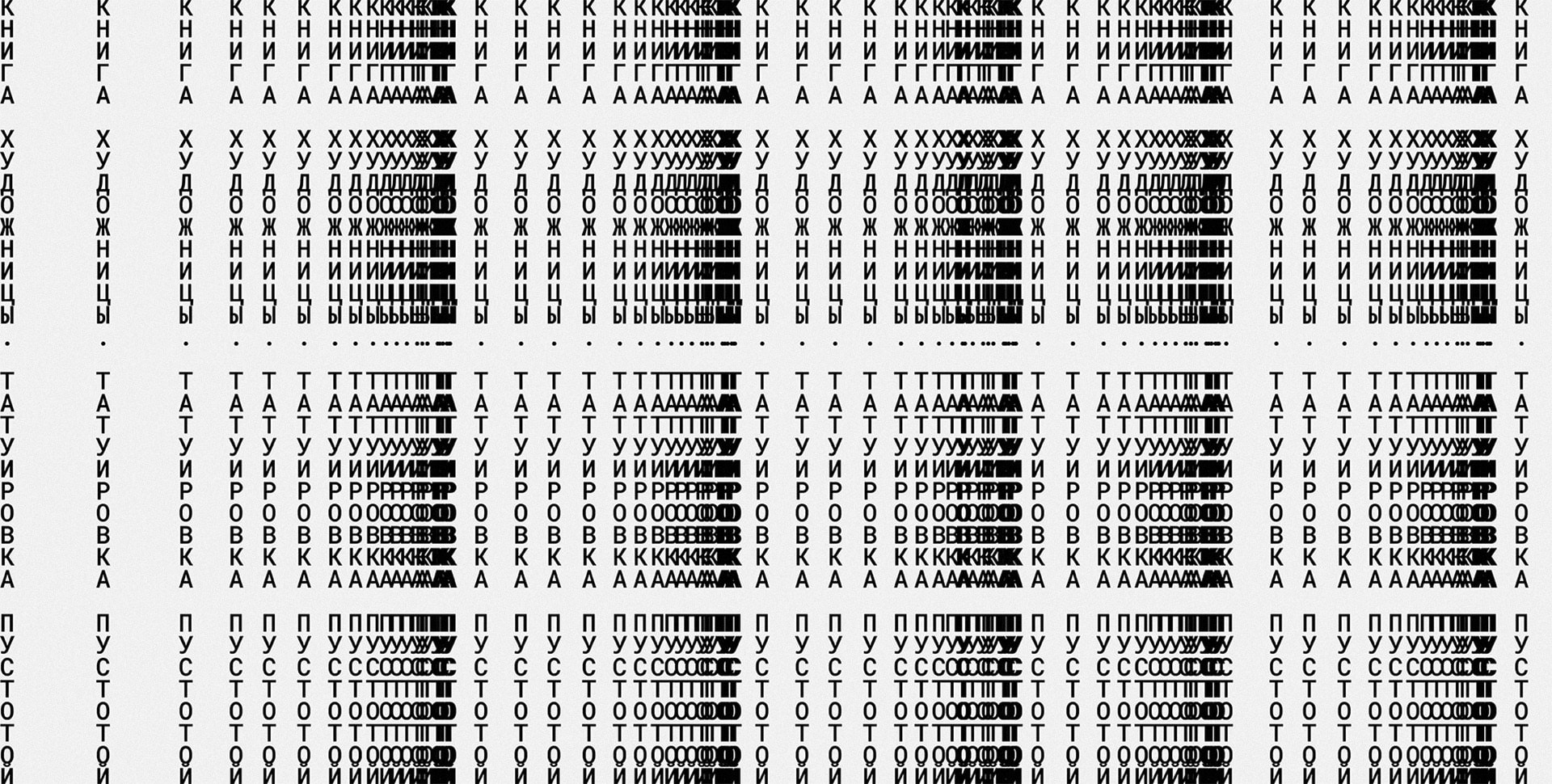
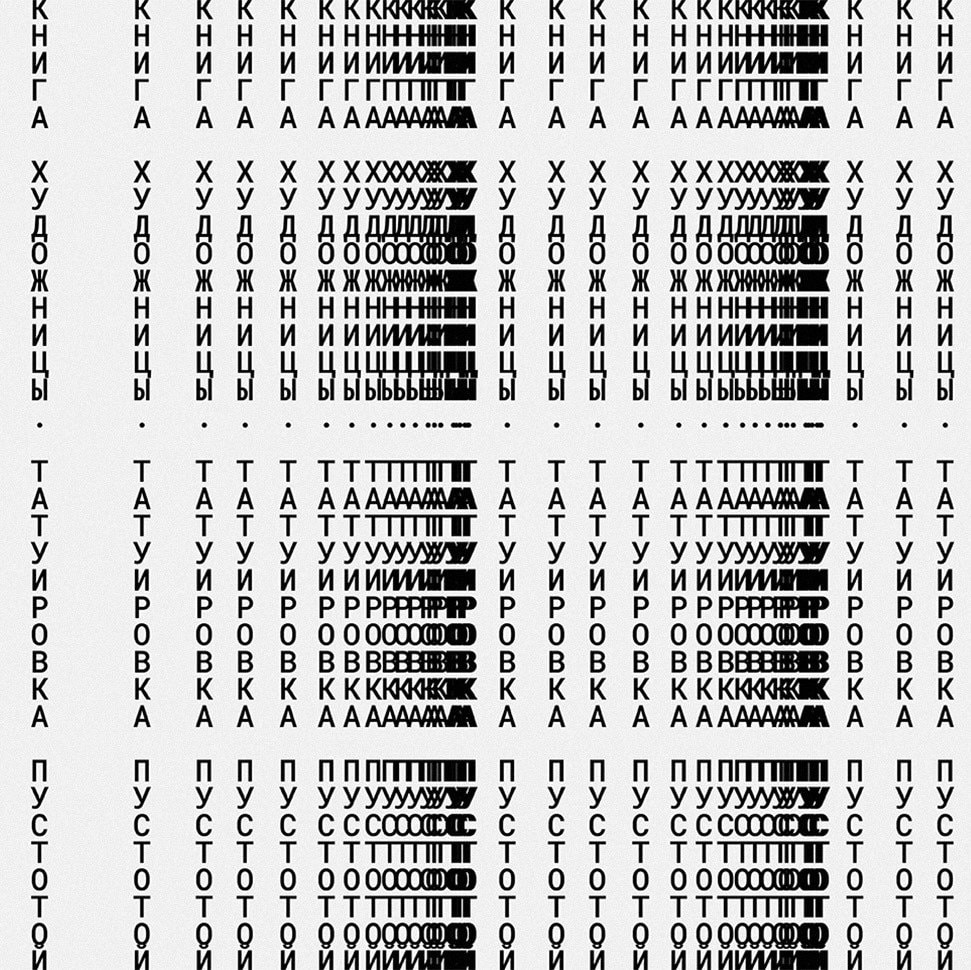
“The book is everything, ” artist and poet Ry Nikonova (Anna Tarshis) wrote in 1992. This statement was as radical as it was all-encompassing. From word-images that inhabit the page, the book is assembled into complex three-dimensional objects; then it moves into other spaces to become a canvas, a cube, a fabric, a mirror or a virtual plane.
The genre of the artist’s book arose partly from the publishing experiments of French collector Ambroise Vollard and gradually radicalized in both content and form throughout the twentieth century. But any conversation about this phenomenon usually avoids giving it an exhaustive definition. Which territory are we on? Is it literature or art? Is it narrative or visual? Two- or three-dimensional?
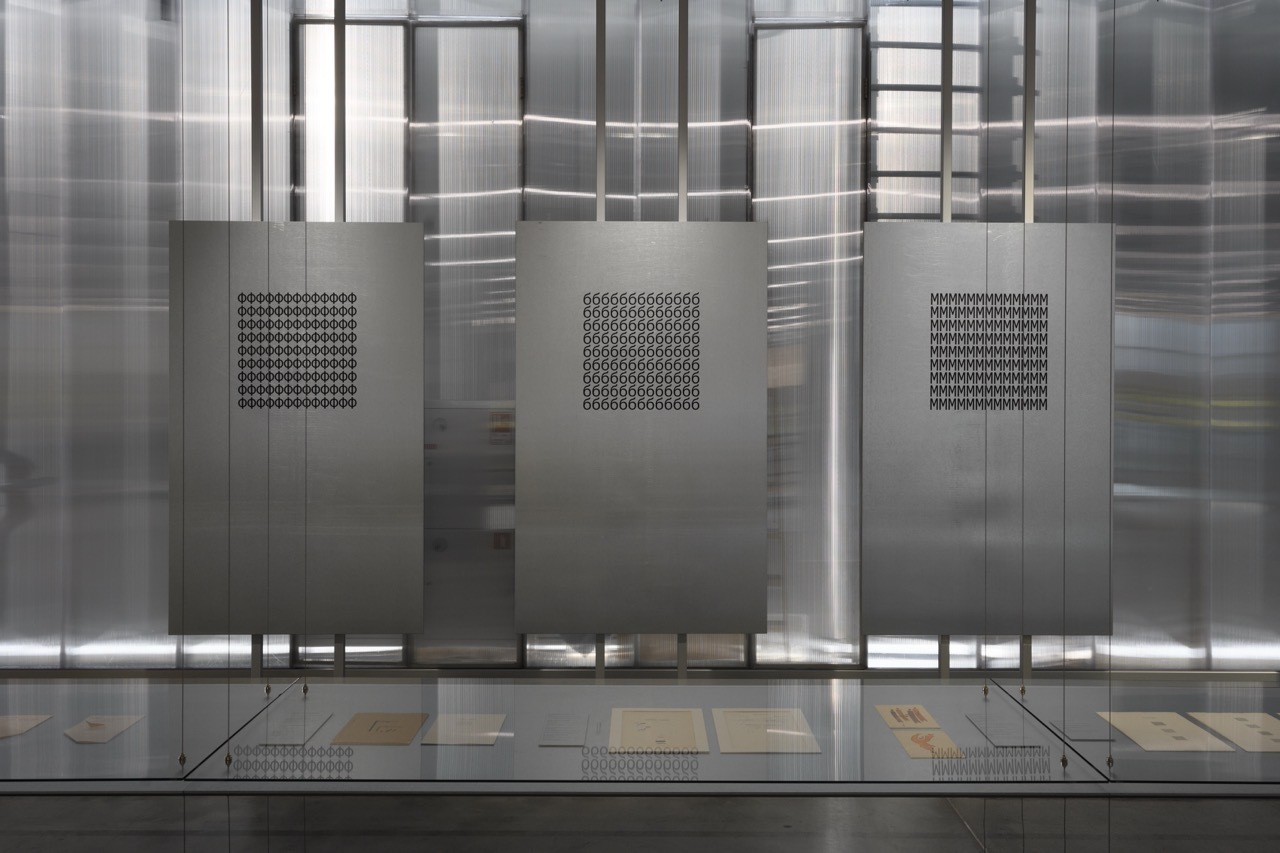
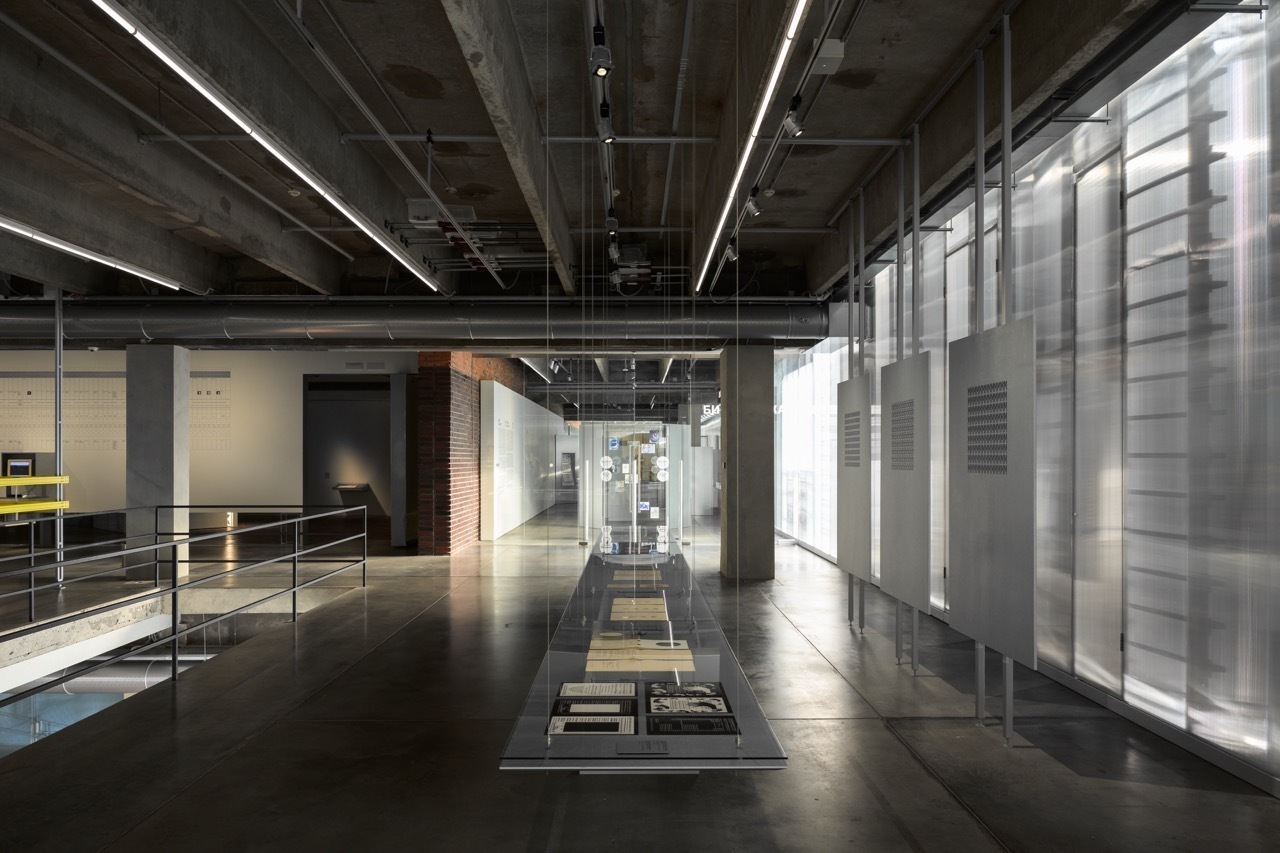
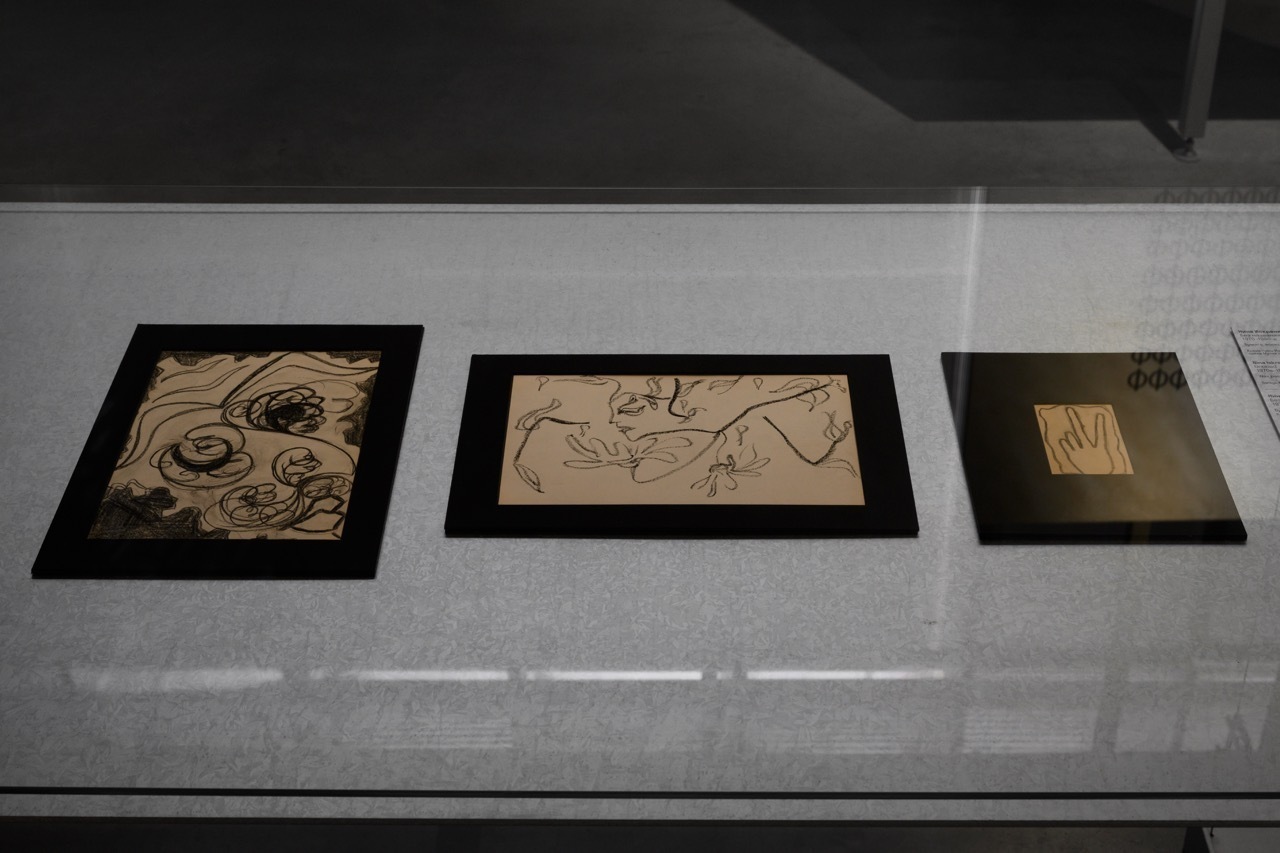
The exhibition presents materials in the manner of an essay. Without aiming to offer an academic study of its subject matter, it traces patterns of correlations, correspondences, and recognitions and, most importantly, takes us away from any attempts to determine the key features of the genre phenomenon that is hidden in related artistic practices. As an example of the medium’s infinite plasticity, Tattooed with Emptiness shows at least one possible approach to decoding it: from the literary and, more narrowly, the poetic angle. The project’s title in Russian is feminized to draw attention to the gender bias contained in the name of the genre in Russian. The literal translation from the French livre d’artiste or the English artist’s book—kniga khudozhnika—is masculine in Russian, although the term khudozhnitsa for a woman artist exists and is commonly used. The project thus invites the viewer to a discussion of the genre that takes into account that some of the first examples of “book art” in Russia included graphic experiments by the “amazons of the [Russian] avantgarde.”
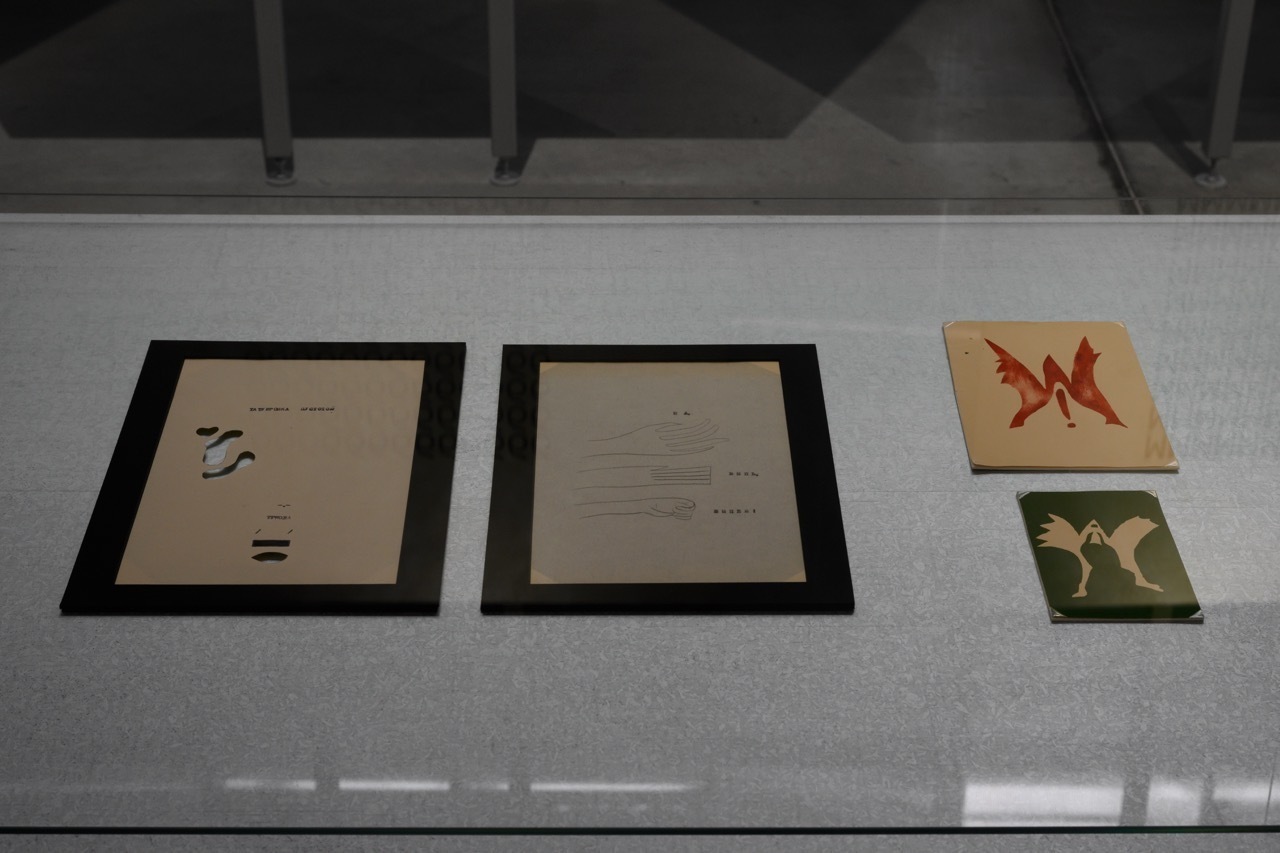
The title was borrowed from a work by Ry Nikonova that is part of her monumental study Tonezharl—a practical compendium that brought all forms of activity and art together in an all-encompassing theoretical “System.” The ambition of her endeavor was comparable to some of the total art projects of the avantgarde, in which emptiness was a key category: emptiness as the limit of art. For the Transfurist group, emptiness—which in the three-dimensional space turned into a vacuum—was an implication and a possibility contained in every text. In The Woman Artist’s Book: Tattooed with Emptiness, the alternative, potential space hiding in the cuts on pages and screens, in the combinations of letters and spaces on sheets of paper and walls, on the surfaces of mirrors, in projections, and on “platforms, ” creates the poetic narrative of the display, celebrating the total experiment of form building.
The curator thanks Mikhail Bordunovsky, Alexander Vitte, Alena Gerasimchuk, Arseny Zhilyaev, Ruslan Komadei, Ksenia Leonova, Olia Lialina, Ksenia Maas, Nikita Nechaev, Mikhail Pavlovets, and Avgust Sigov for their invaluable assistance and support in bringing this project to fruition.