For many years, the archive of Leonid Talochkin, the “chronicler of unofficial art,” was surrounded by legends, and only a select few had the chance to see it in person.
No less significant than the works in his collection, however, are Talochkin’s own writings, which could serve as the foundation for a detailed study of postwar Soviet and Russian art. At the core of these writings lie his diaries.
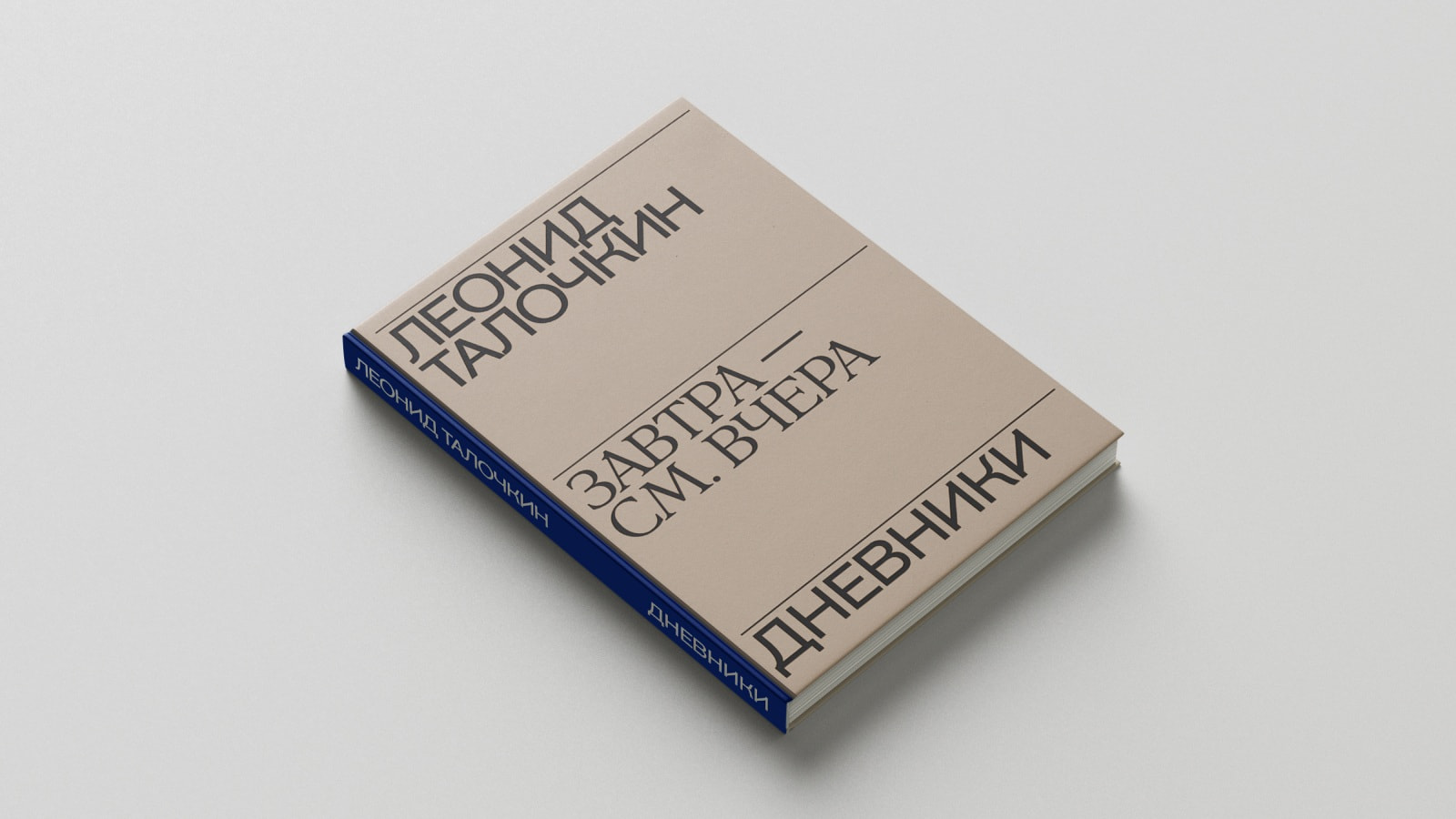
Tomorrow — See Yesterday marks the first publication of Leonid Talochkin’s diaries. Personal entries alternate with descriptions of exhibitions, concerts, and artistic gatherings, with everyday episodes and extended reflections. Together they form a richly detailed portrait not only of the artistic milieu of the 1960s — the period encompassed by this volume — but of Soviet society as a whole. Above all, Talochkin writes about people — the ones he spoke with, loved, admired, and sometimes grew disillusioned with.
His diaries illuminate overlooked corners of history: the activities of kinetic artists such as Vyacheslav Koleichuk and Lev Nusberg; Yuri Mamleev’s work on the novel The Sublimes; the emergence of the Yuzhinsky Circle; the creative path of Boris Kozlov; and episodes connected with Lev Kropivnitsky and the Lianozovo school. Alongside the central figures of the cultural underground, the diaries also preserve the names of those who have since been forgotten.
Tomorrow — See Yesterday is the result of more than seven years of work, carried out in collaboration with the State Tretyakov Gallery (as part of a joint project that also produced the 2022 catalogue I Knew Them All). Research on Talochkin’s archive continues, with work now underway on his diaries from the 1970s and an expanded name index.