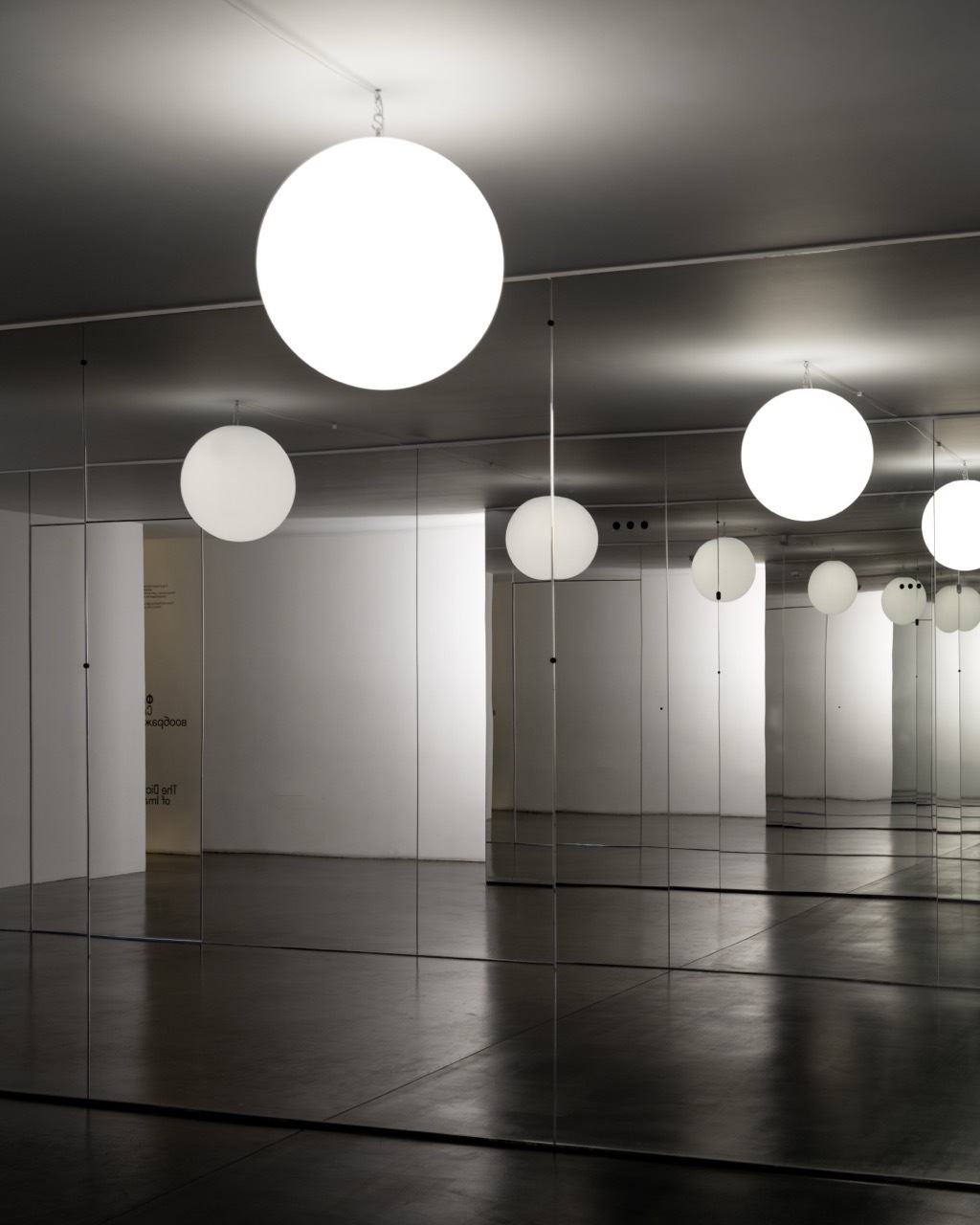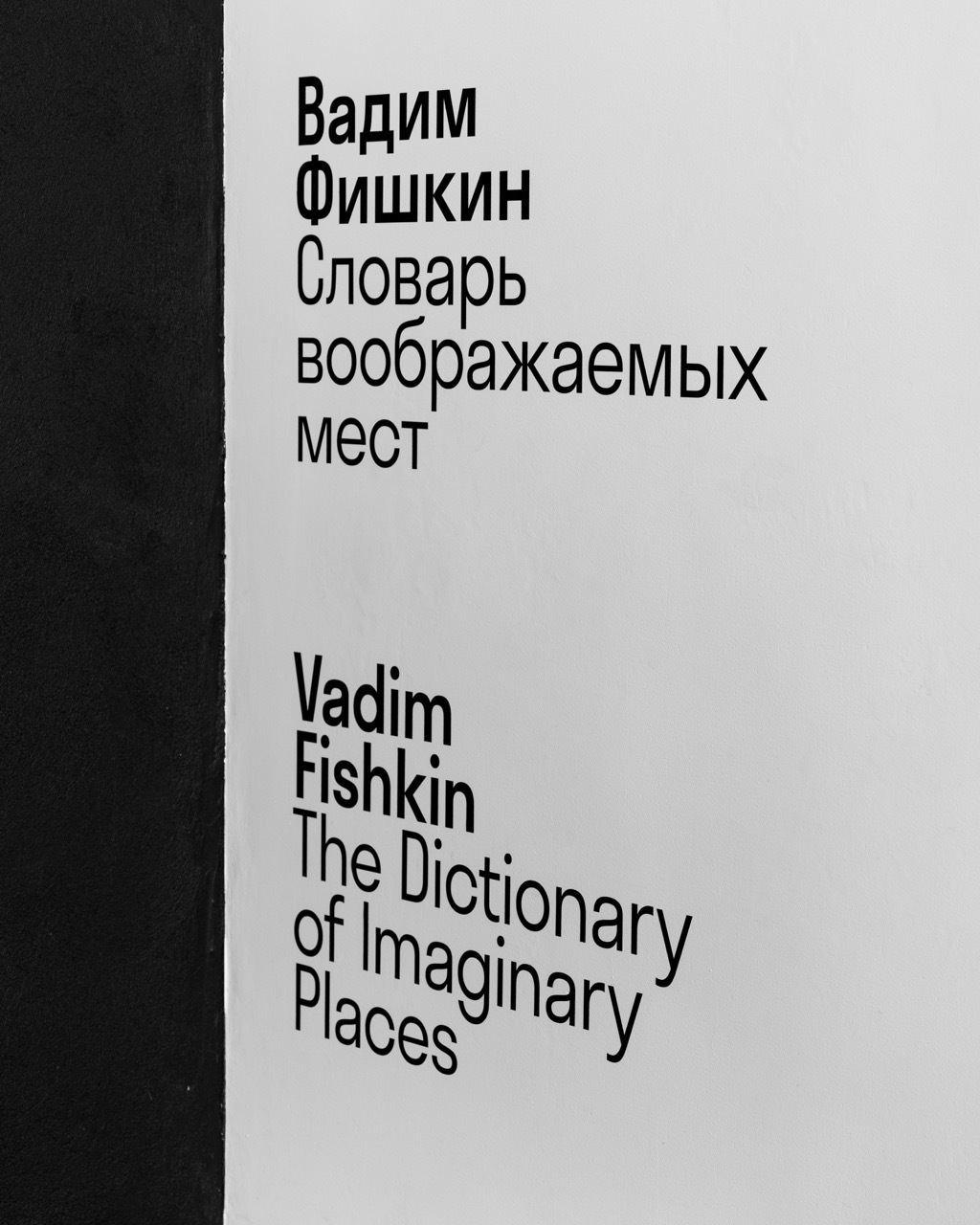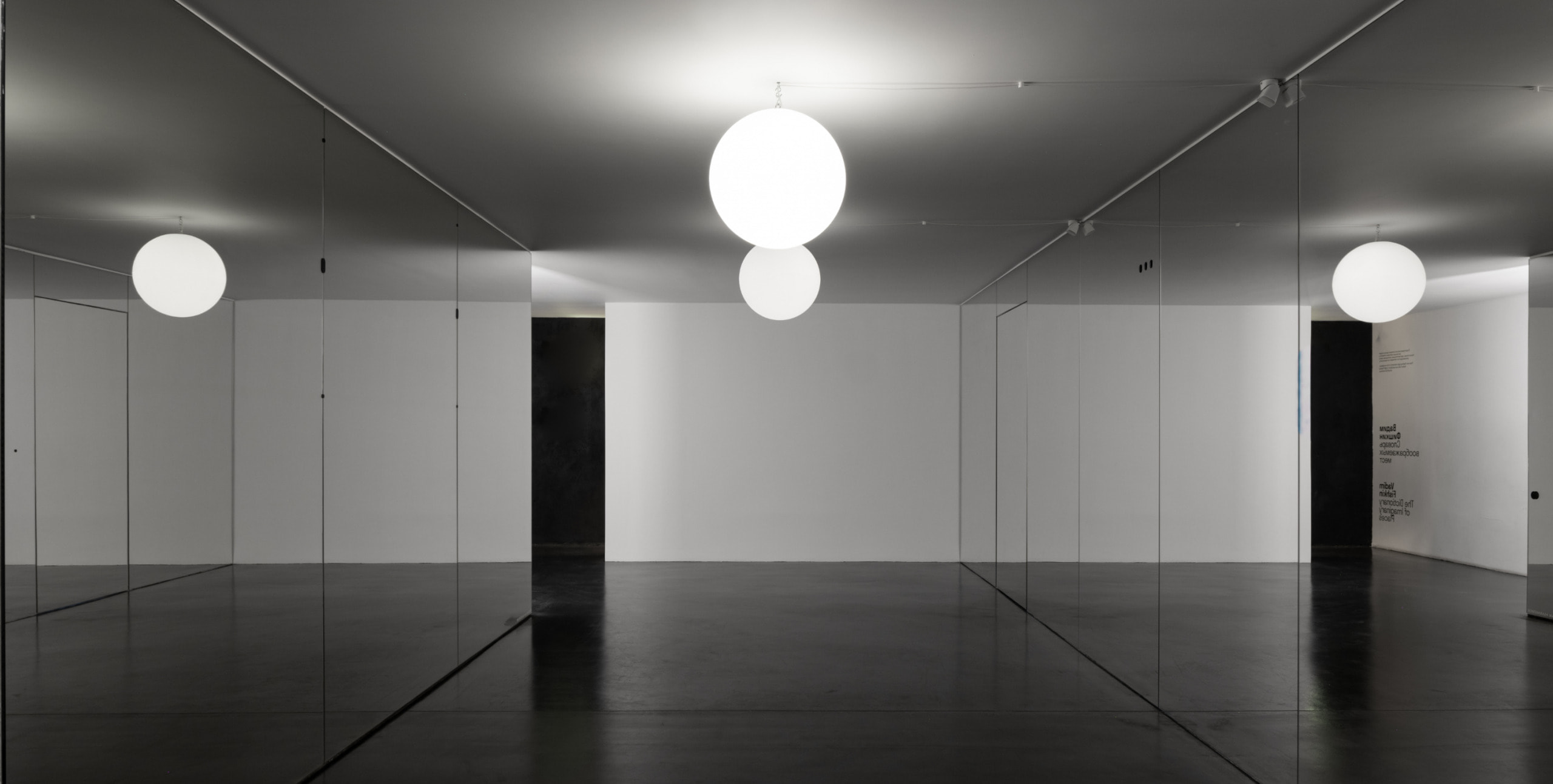
Vadim Fishkin’s installation The Dictionary of Imaginary Places explores imagination as an important means of interacting with reality. At Garage, the installation is shown in Russian for the first time.
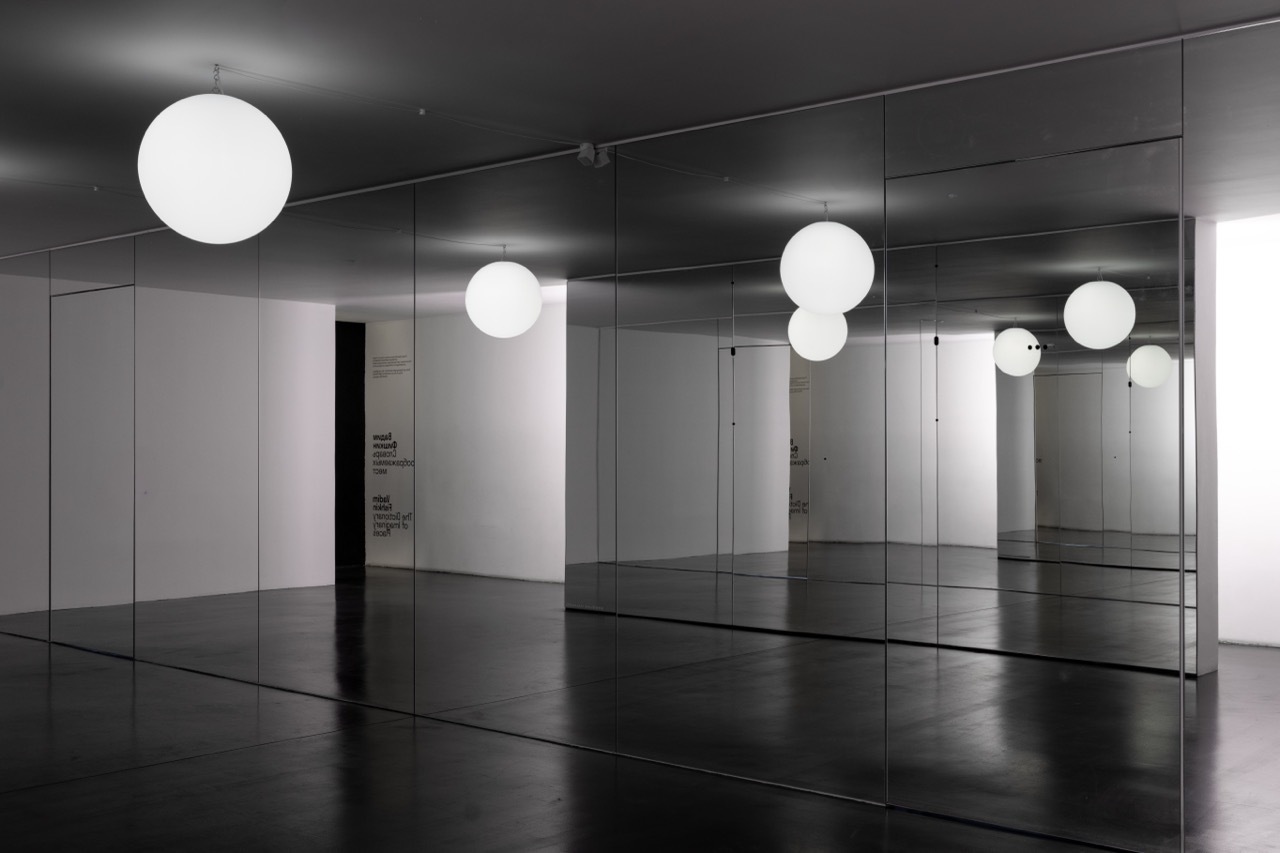
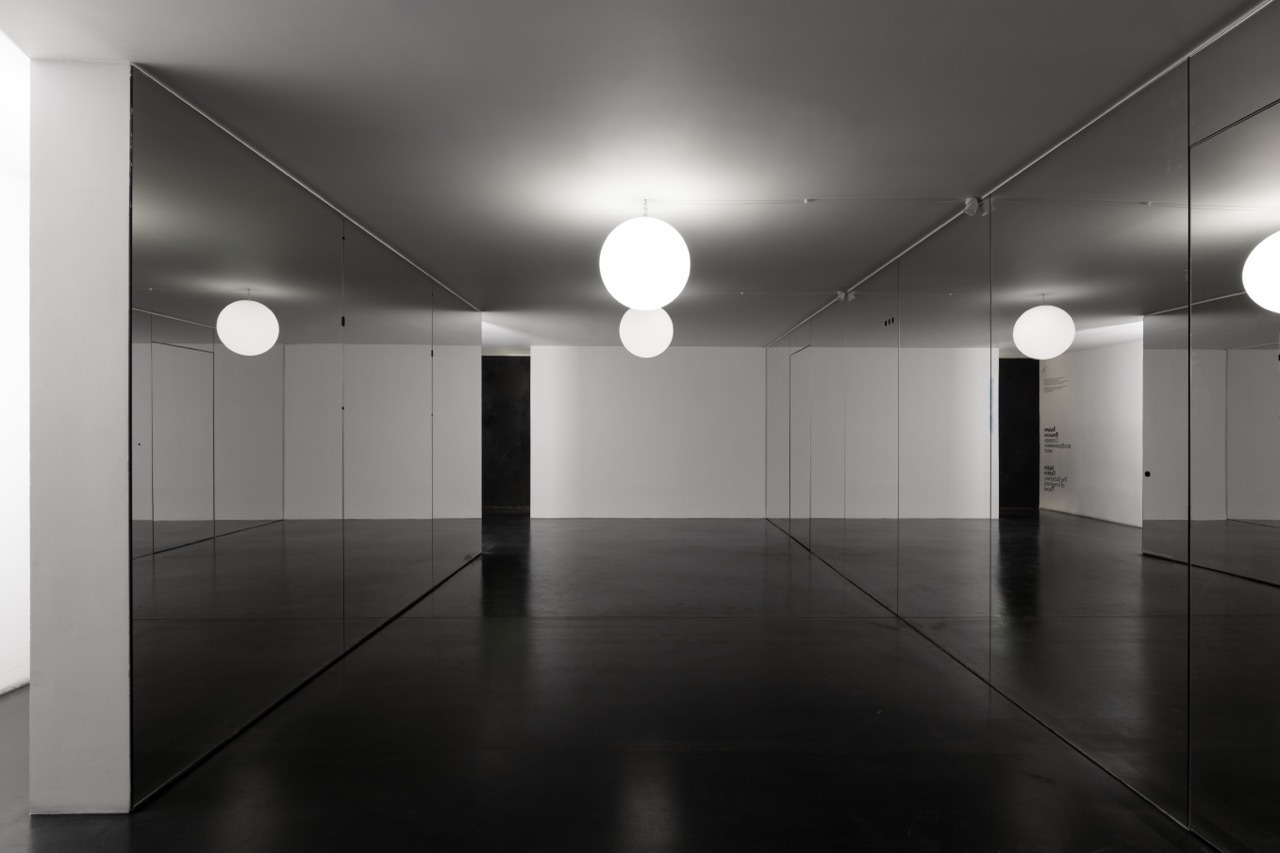
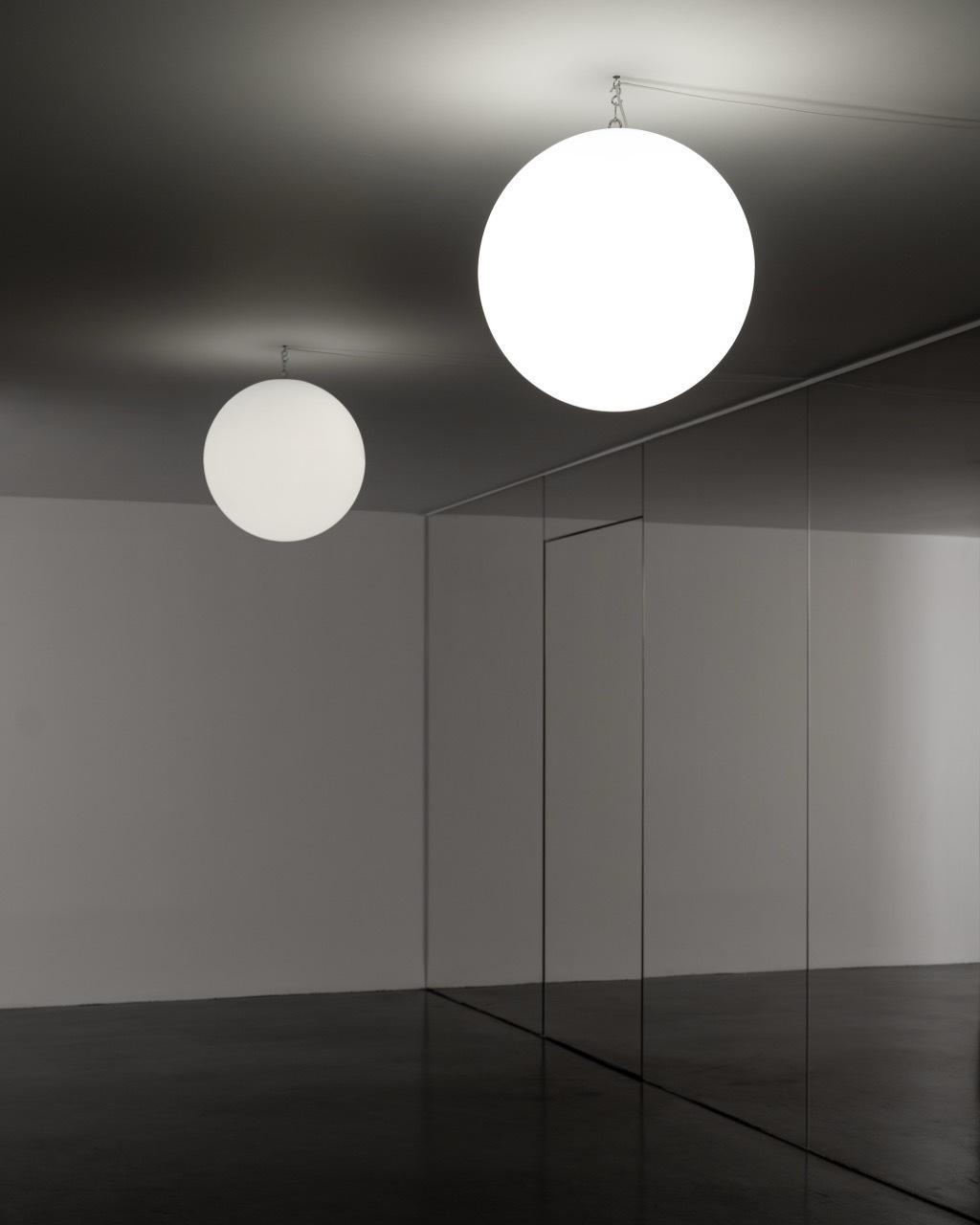
Fishkin’s laconic visual language often hides meticulous engineering. However, to him, light, sound, and optics are not so much tools as magical devices: his artistic gestures are both ironic and moving. In 2000, he made The Dictionary of Imaginary Places, an object with two lamps named after the encyclopedia of imaginary toponyms from world literature by Alberto Manguel and Gianni Guadalupi (1980). The book contained “encylopedic” descriptions of each imaginary place, some with illustrations and maps. Since then, Fishkin has produced several versions of the work, each time adapting it to the exhibition space. The installation at Garage is the first in Russian. Fishkin has expanded it with toponyms from Russian literature.
The space on the lower ground floor of the Museum, illuminated with a complex shade of pink, is a popular selfie spot. Fishkin has emphasized this function by creating a gallery of infinite images through the addition of a mirror. The joy of recognizing one’s own multiplying image can refer to the “mirror stage”—the period when a child forms the imaginary and builds an “I”, as described by French philosopher and psychoanalyst Jacques Lacan. Throughout their life, humans imagine what is not there, try to complete the picture and model the impossible. The latter is represented by the amusing, pretend light-and-sound dialogue of two personified lamps. Fishkin’s work gives material expression to the phenomenon of imagination, which possesses a special power. The ability of our consciousness to change our state through imagination is an important regulation system that becomes useful in times of crisis, allowing us to envision alternatives or find new ways of interacting with reality. The work also raises the question of the power of language and the mind’s ability to oppose it.