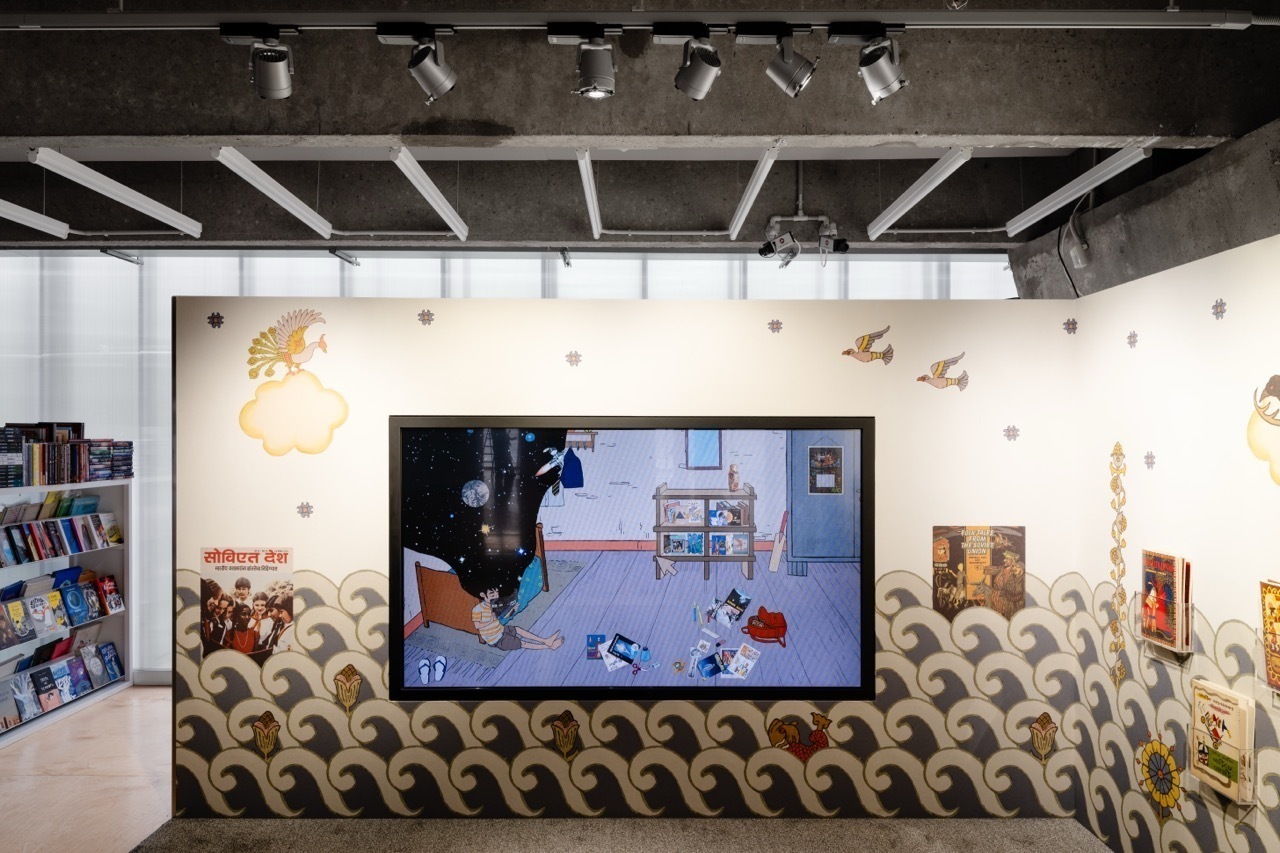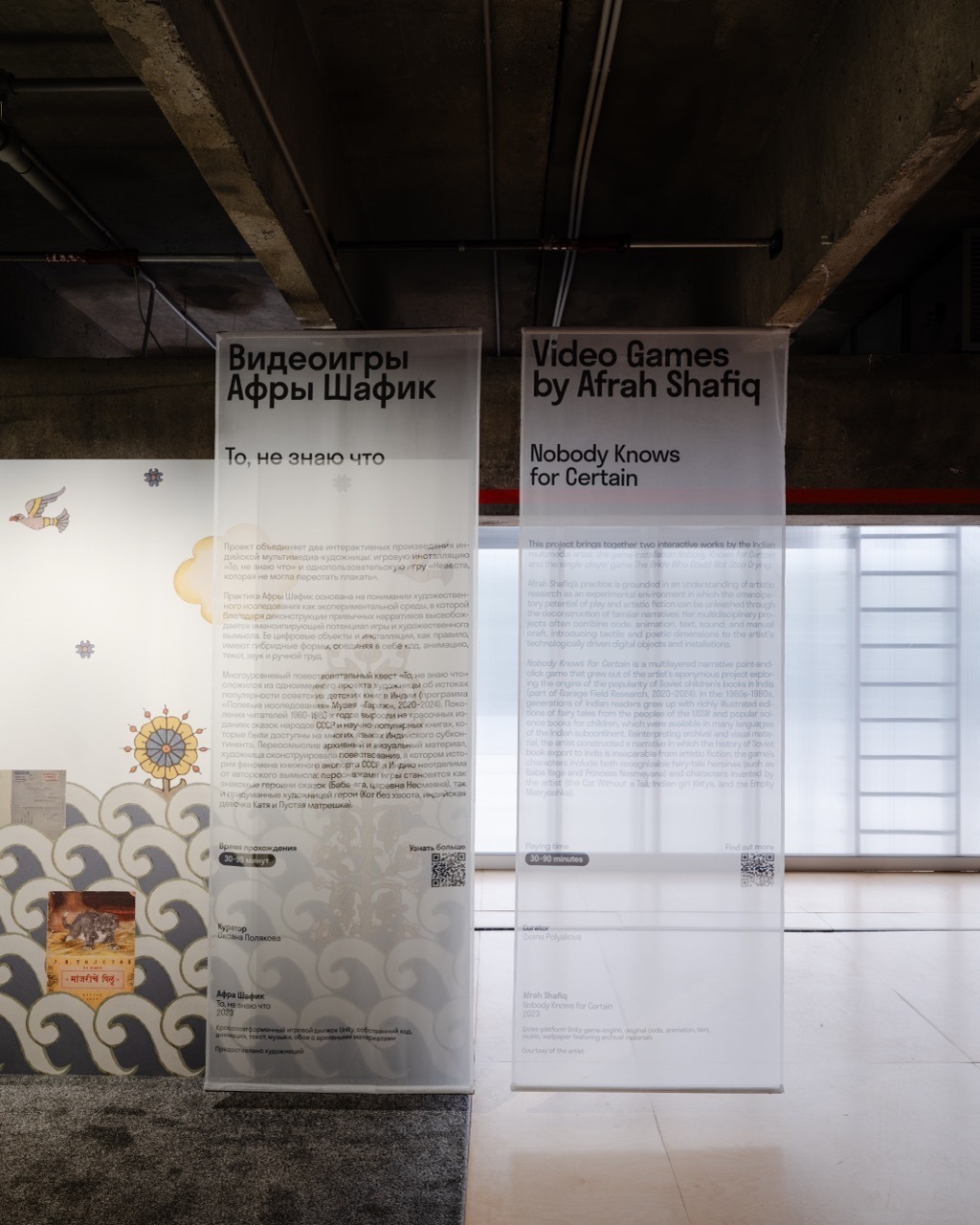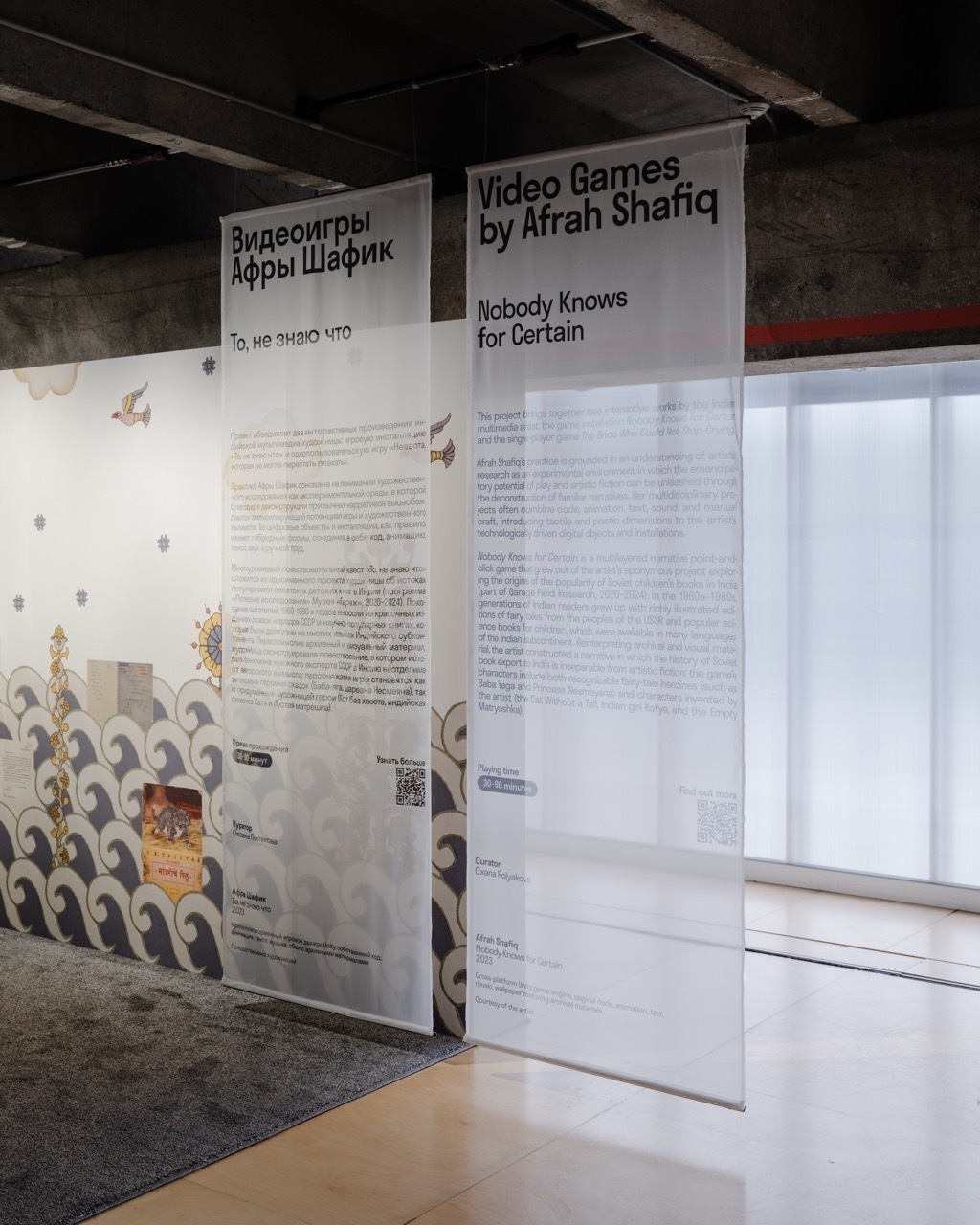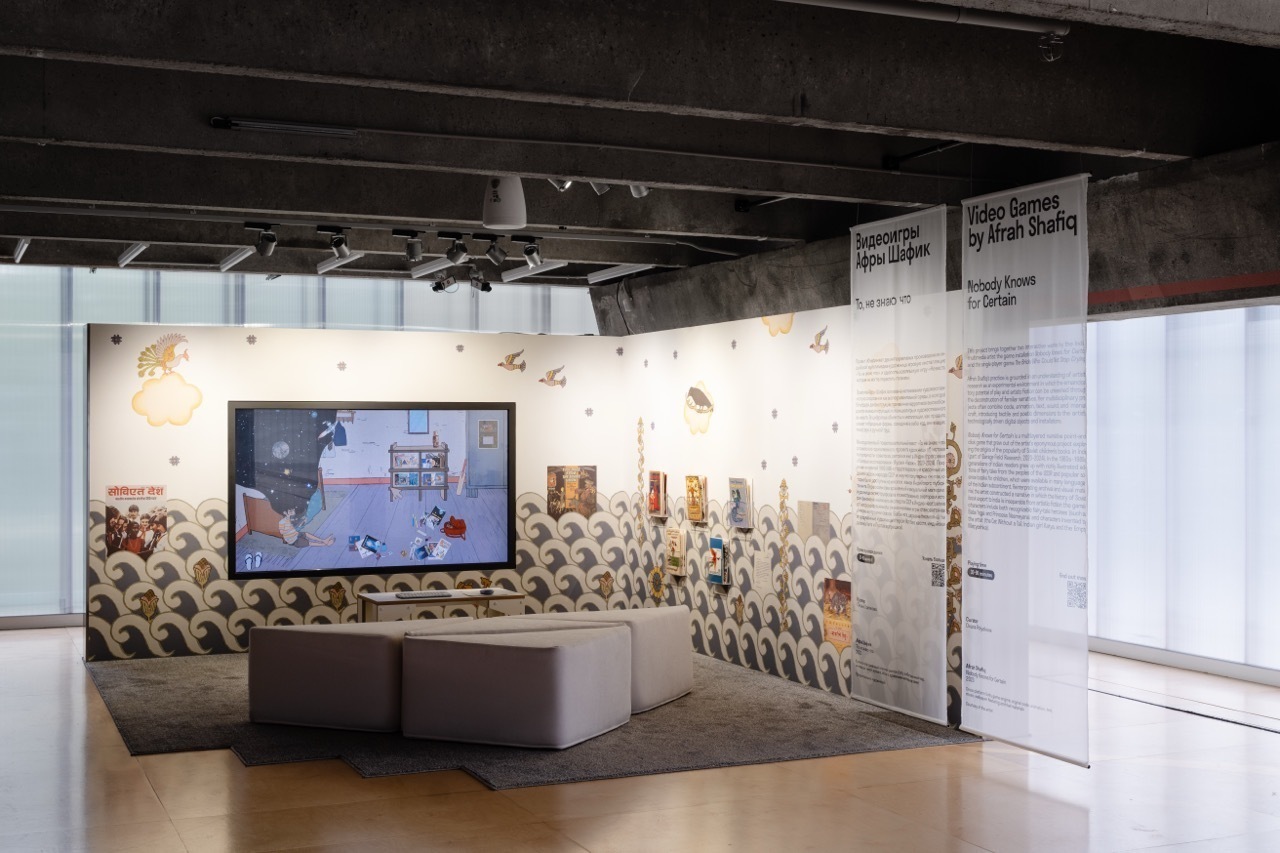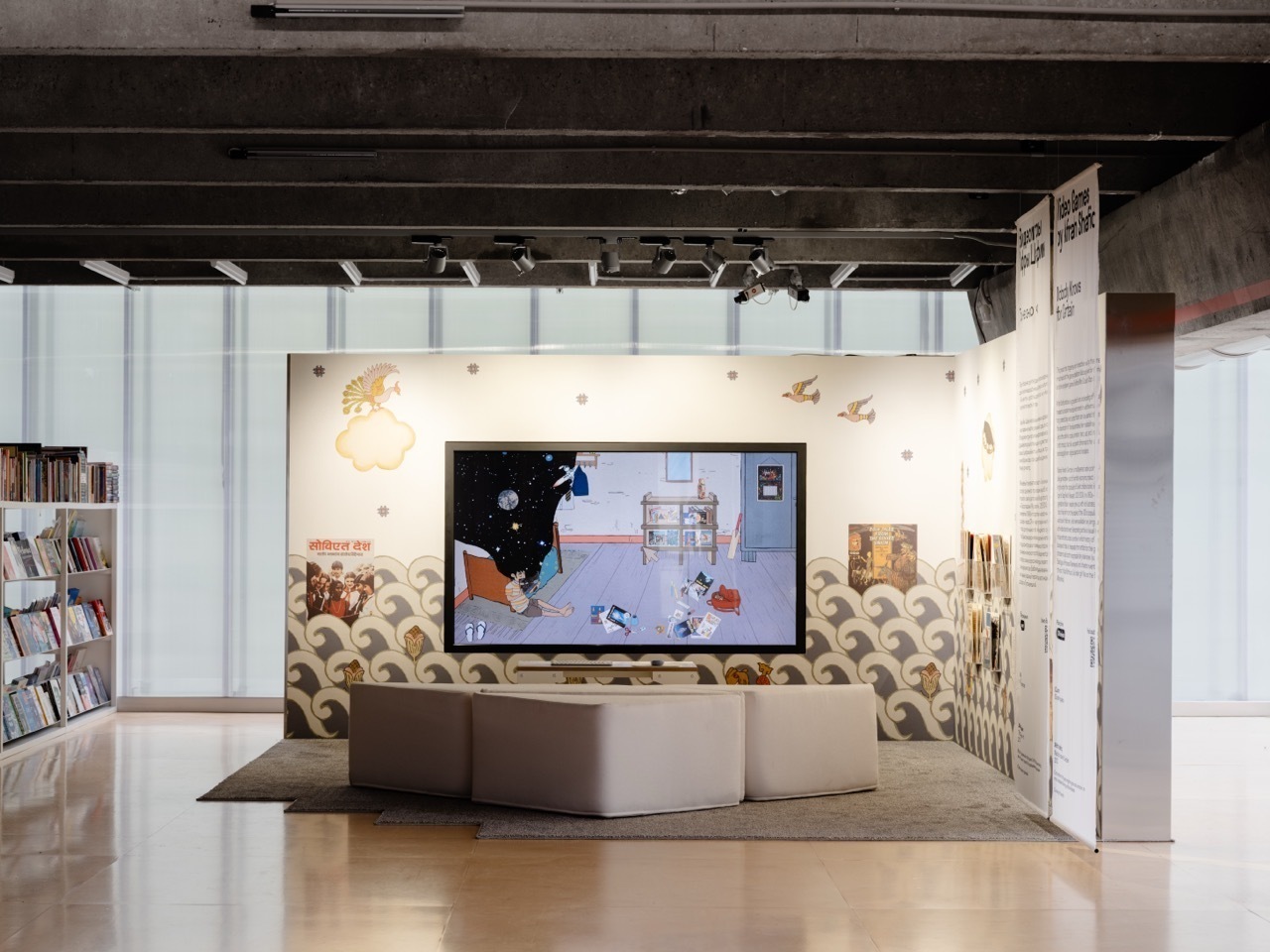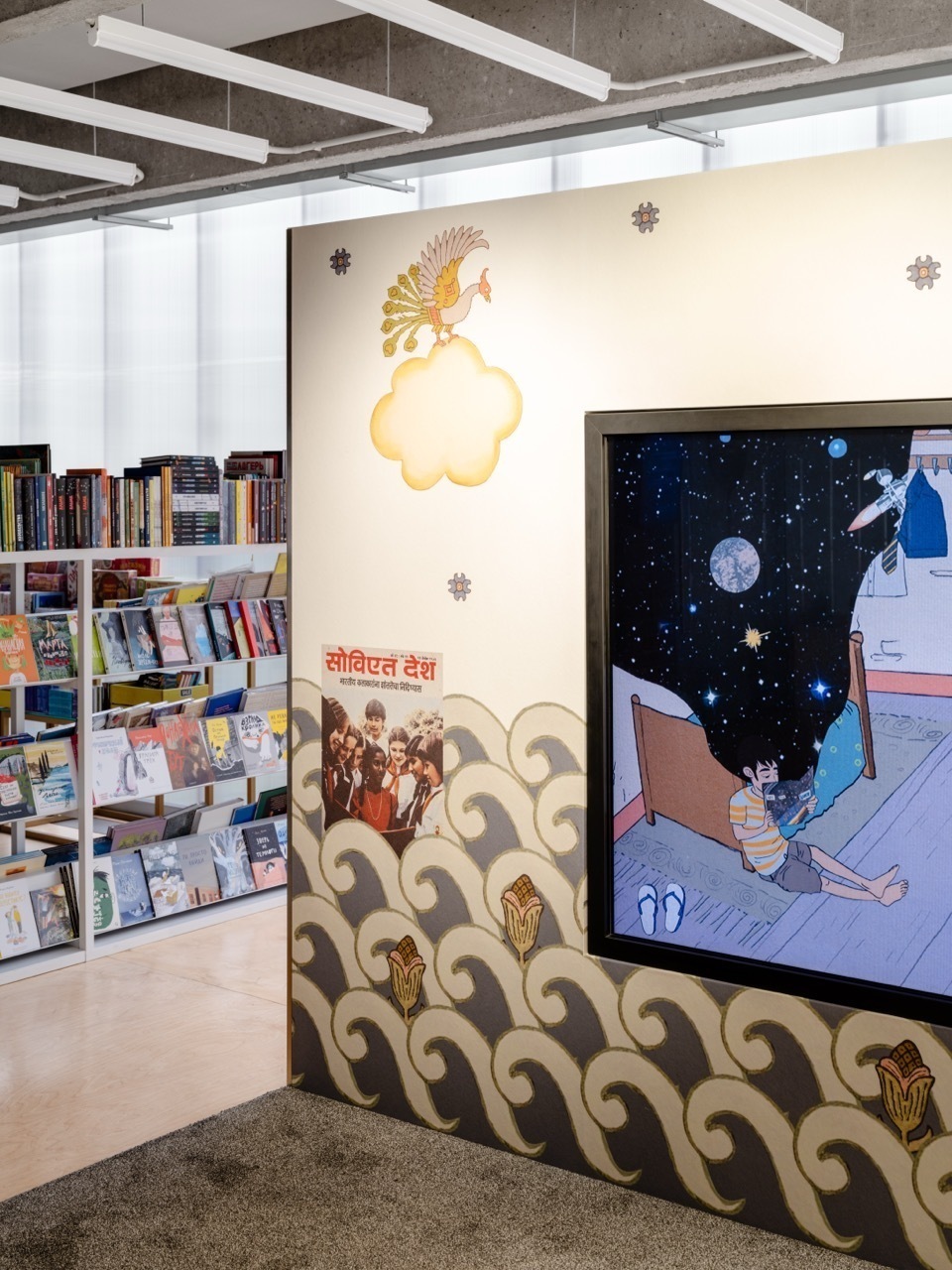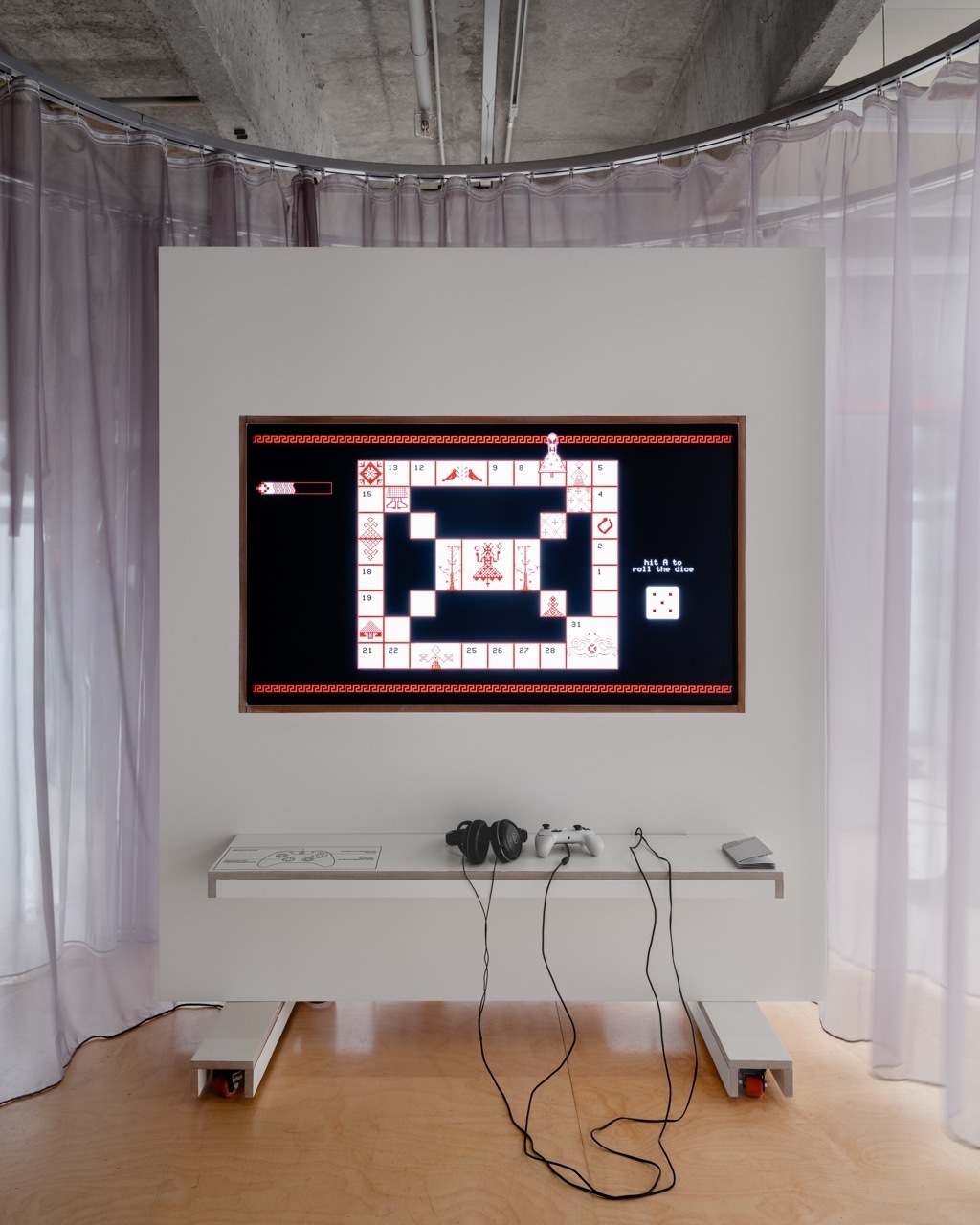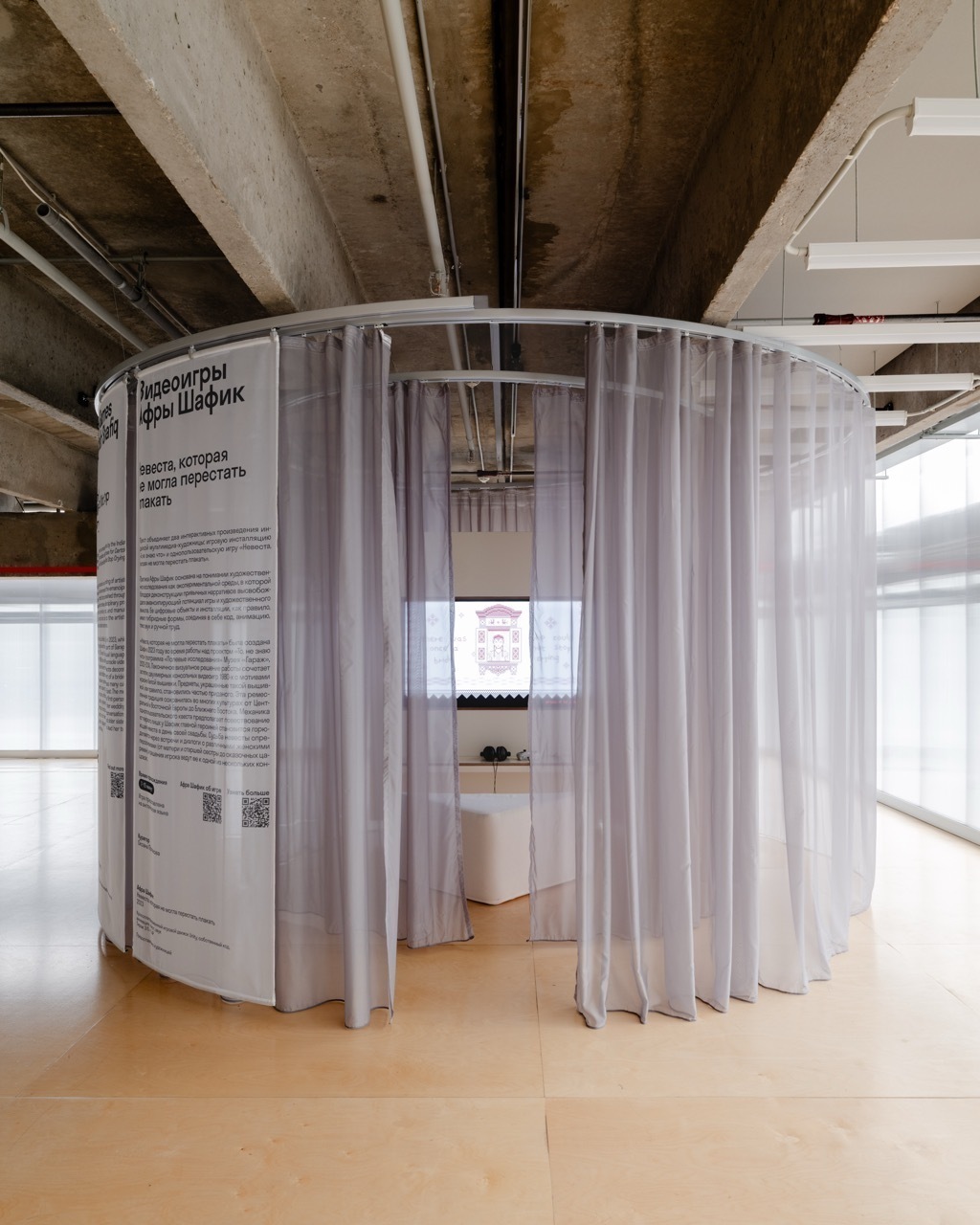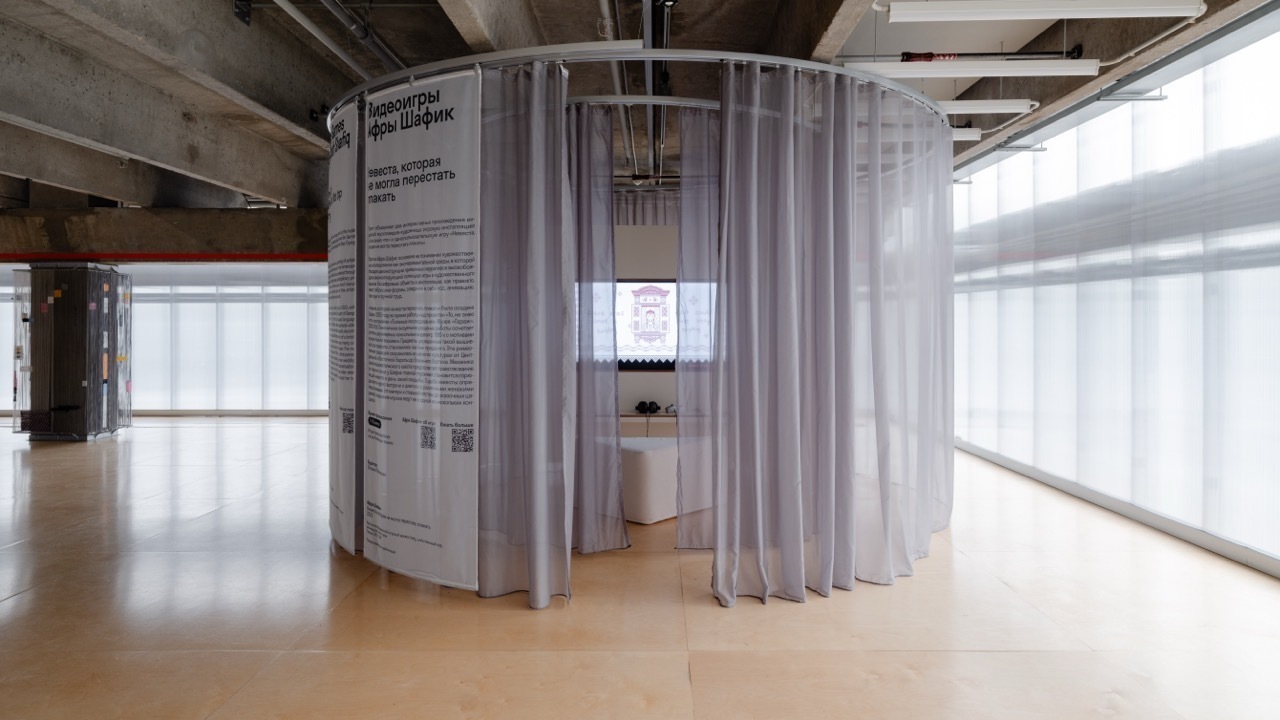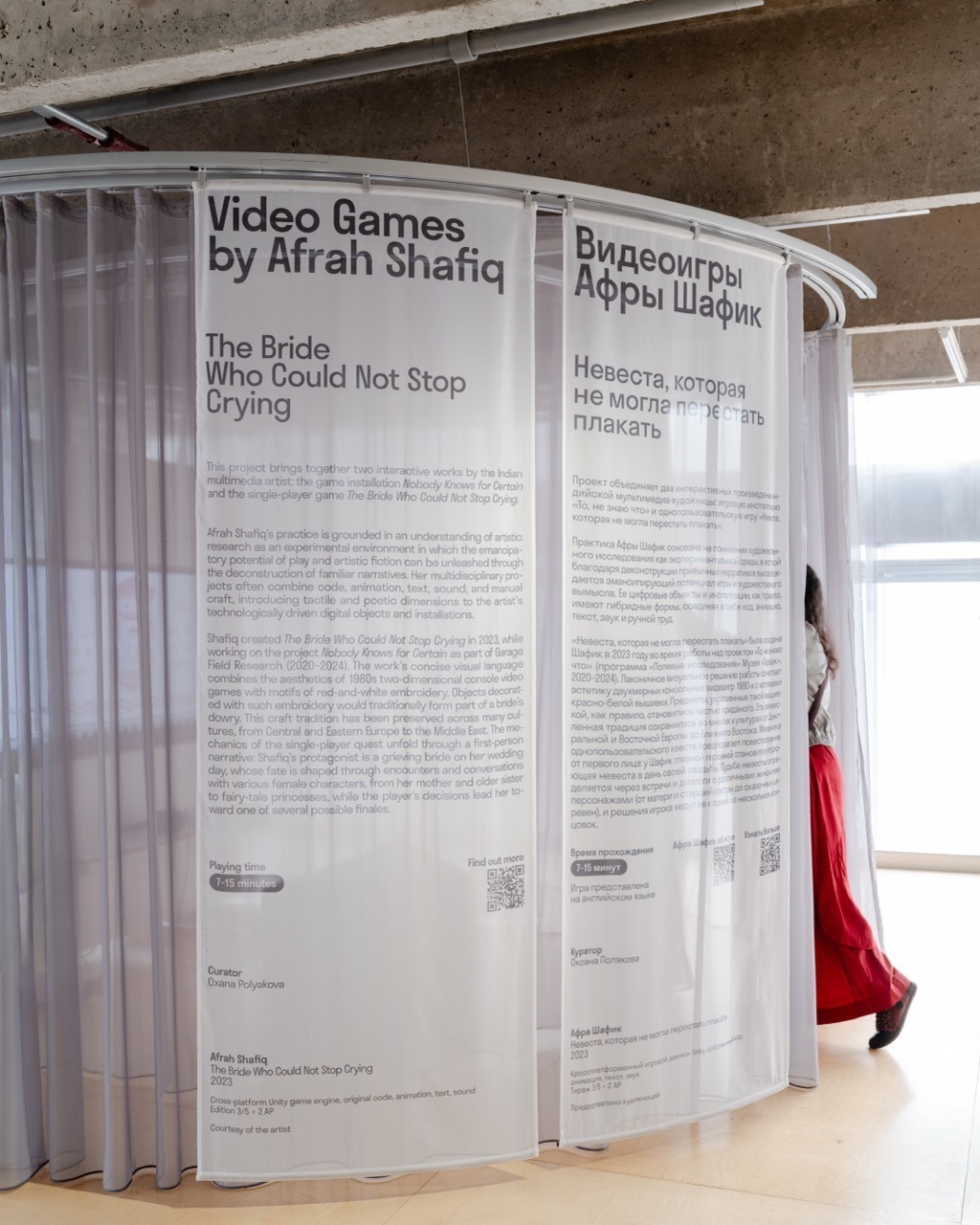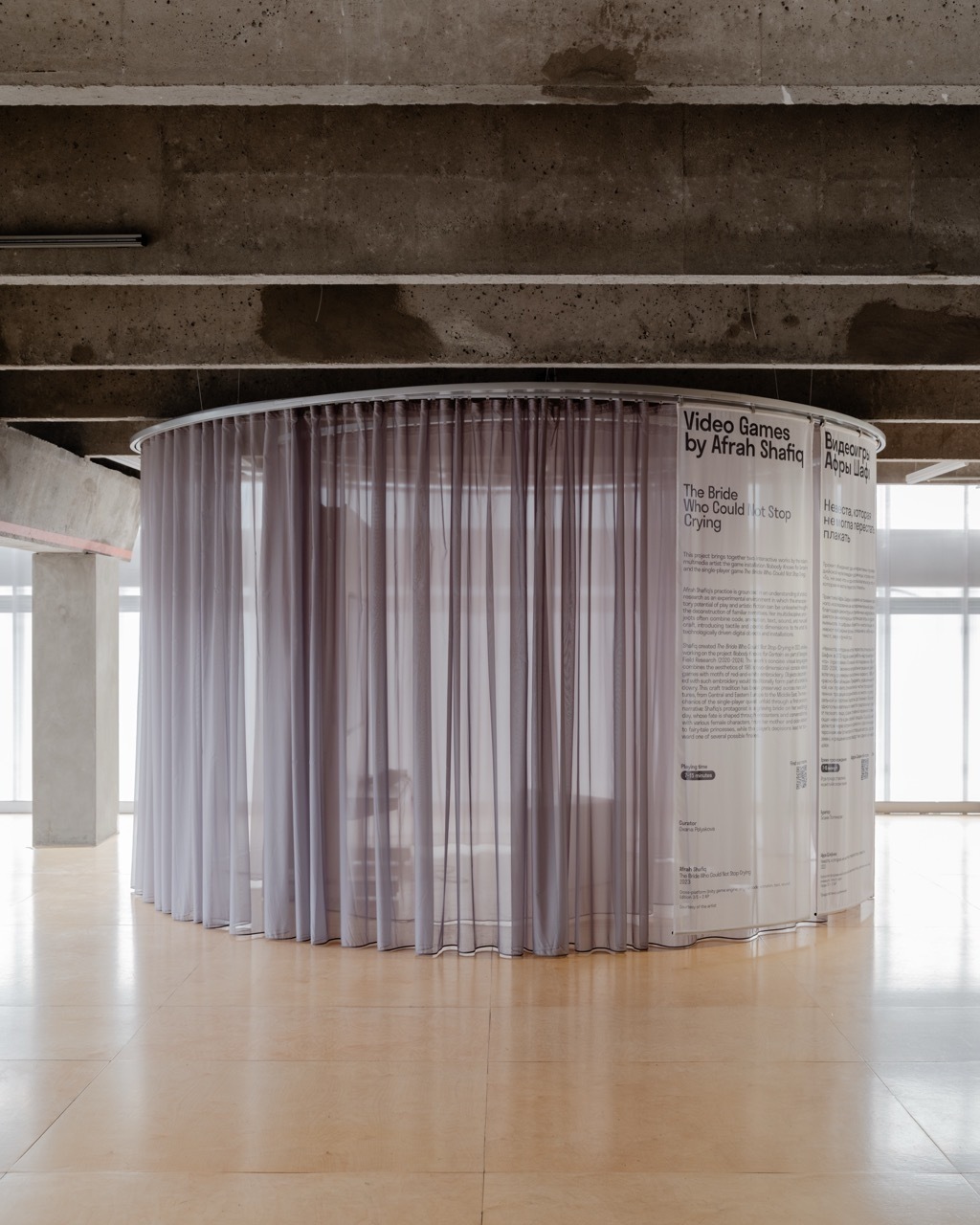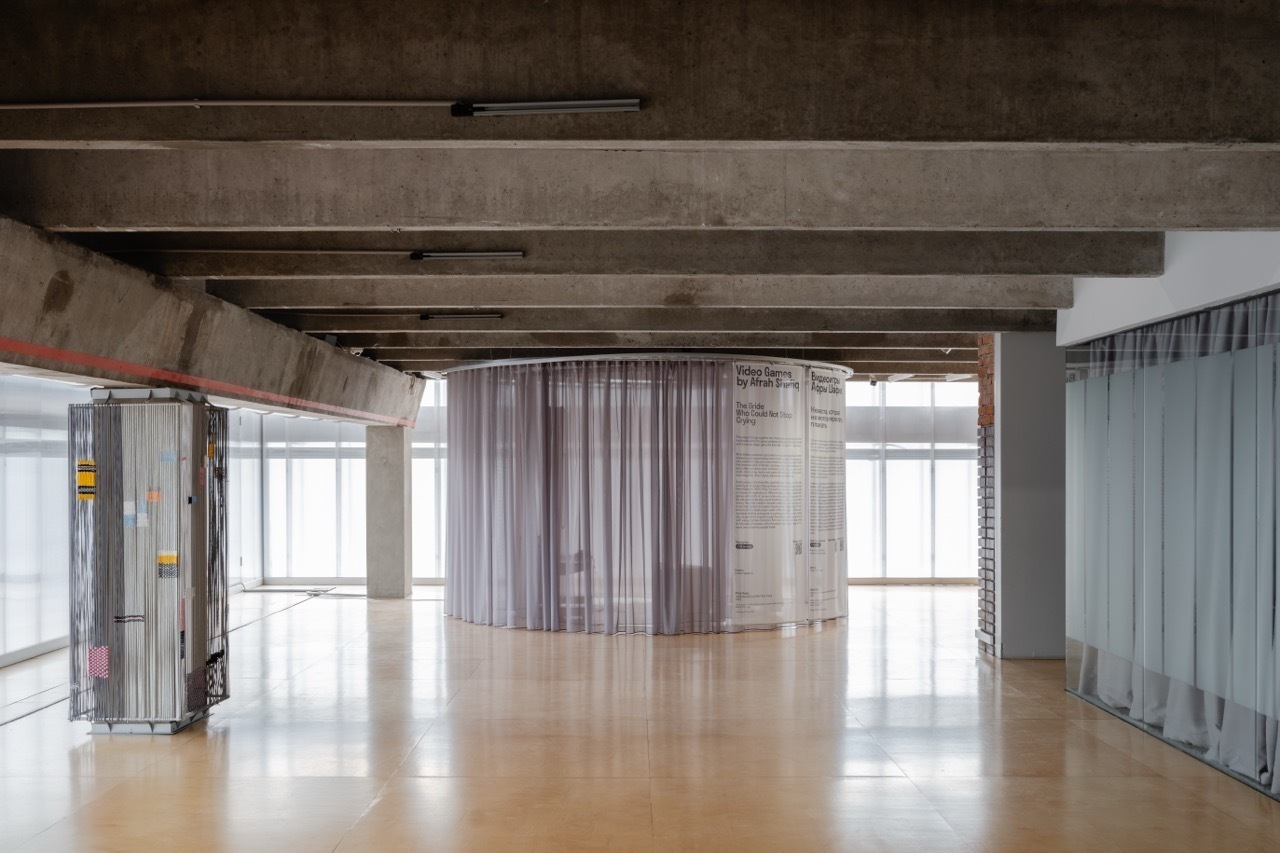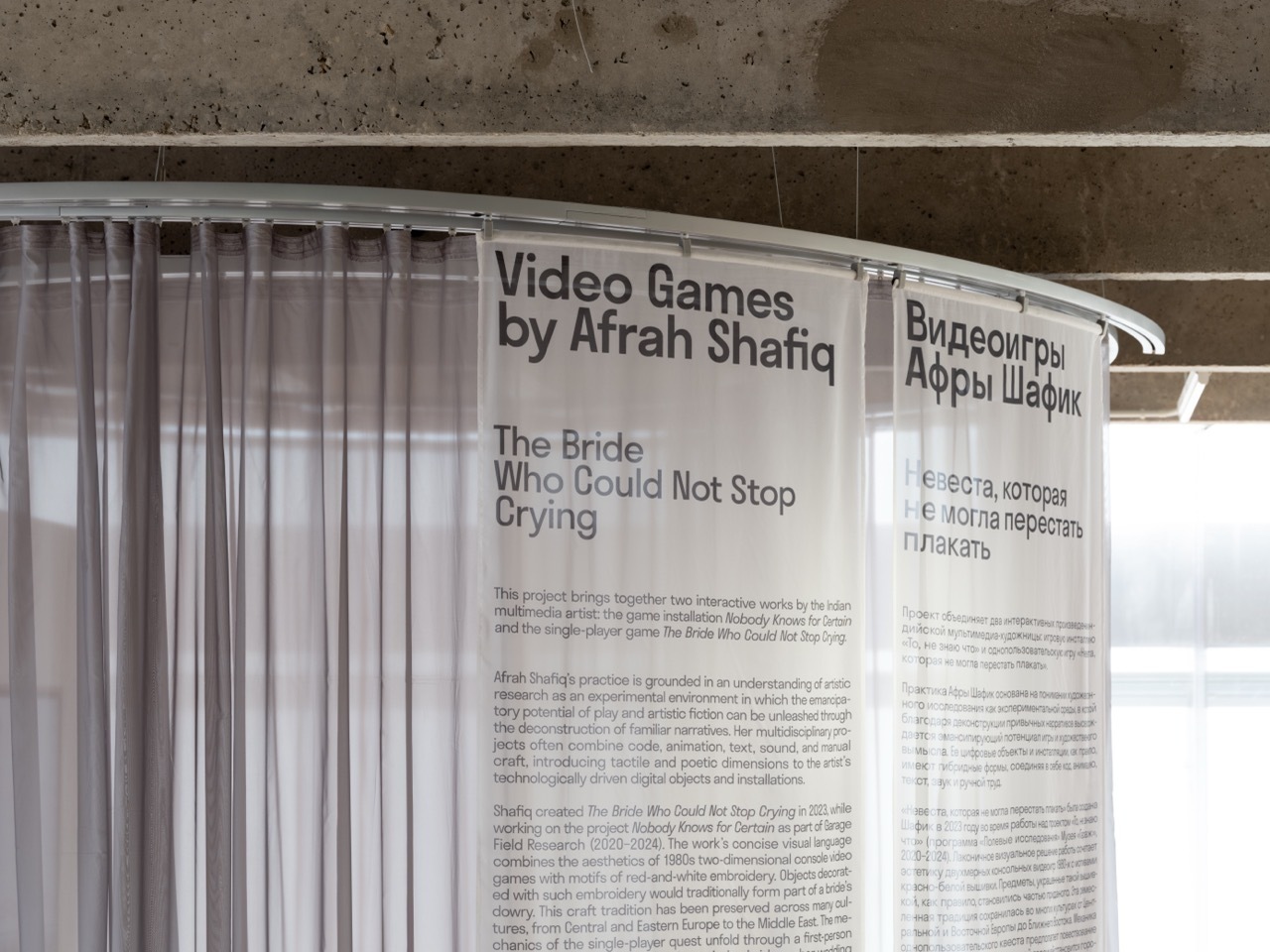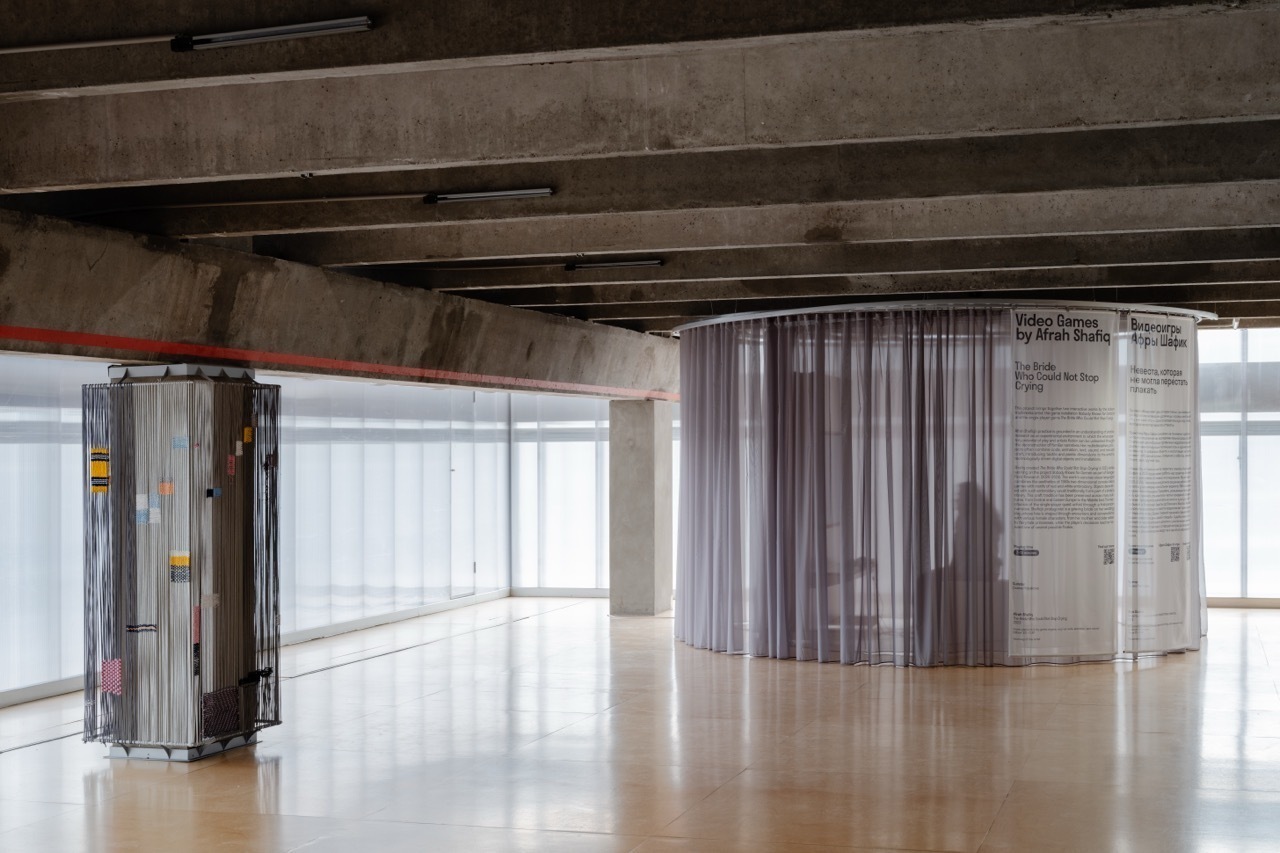
Two interactive works by Indian multimedia artist Afrah Shafiq: the game installation Nobody Knows for Certain and the single-player game The Bride Who Could Not Stop Crying.
Afrah Shafiq’s practice is grounded in an understanding of artistic research as an experimental environment in which the emancipatory potential of play and artistic fiction can be unleashed through the deconstruction of familiar narratives. Her multidisciplinary projects often combine code, animation, text, sound, and manual craft, introducing tactile and poetic dimensions to the artist’s technologically driven digital objects and installations.
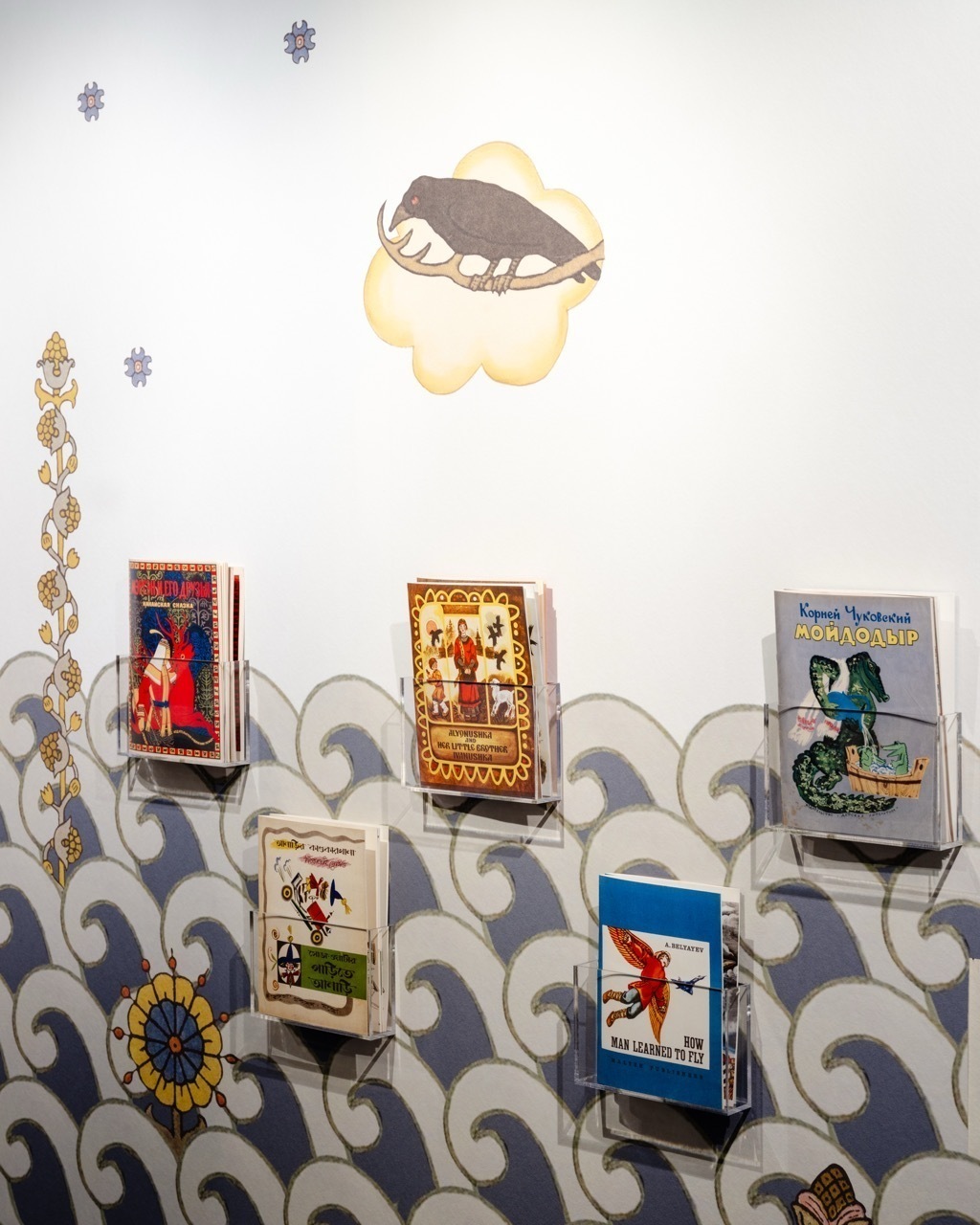
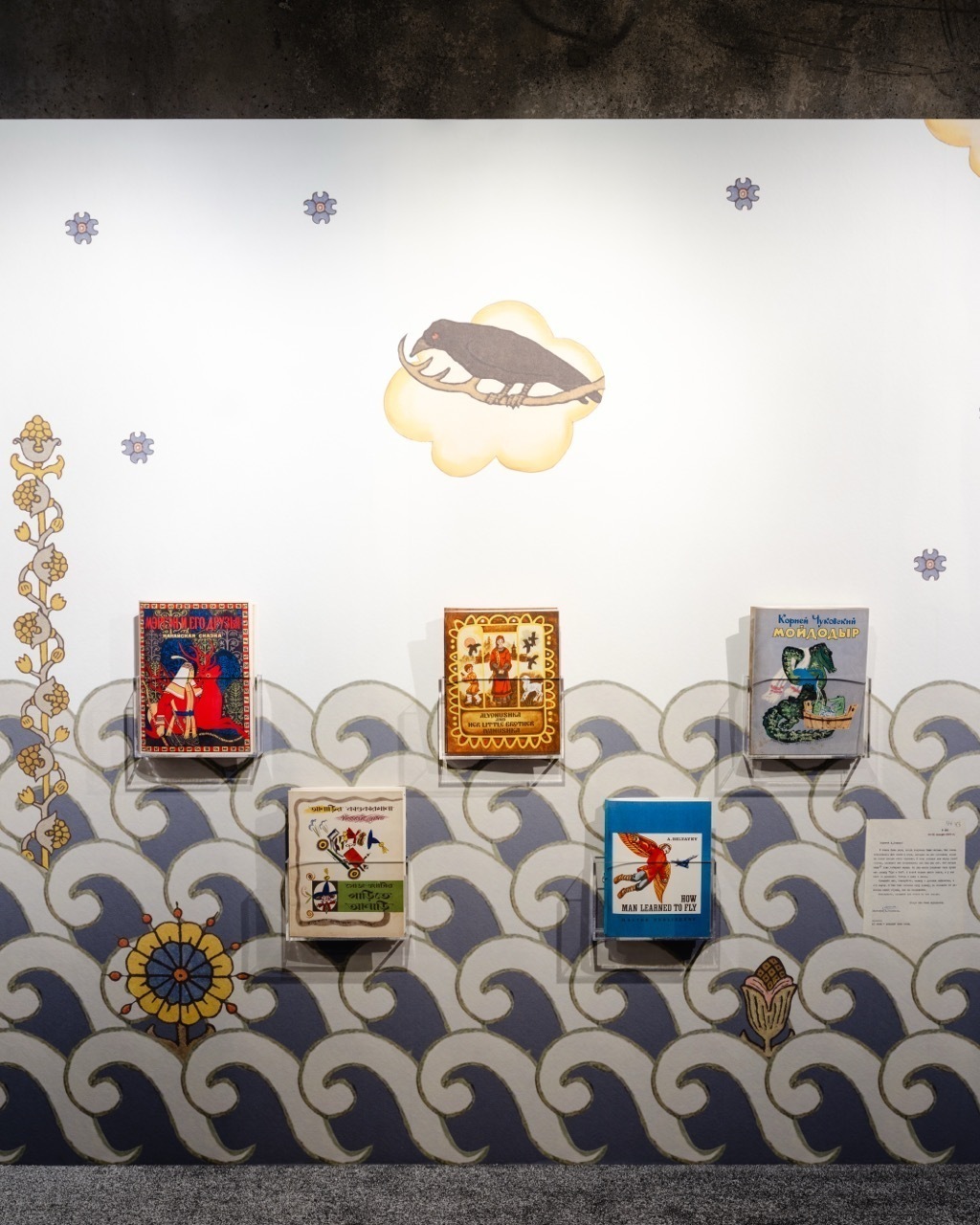
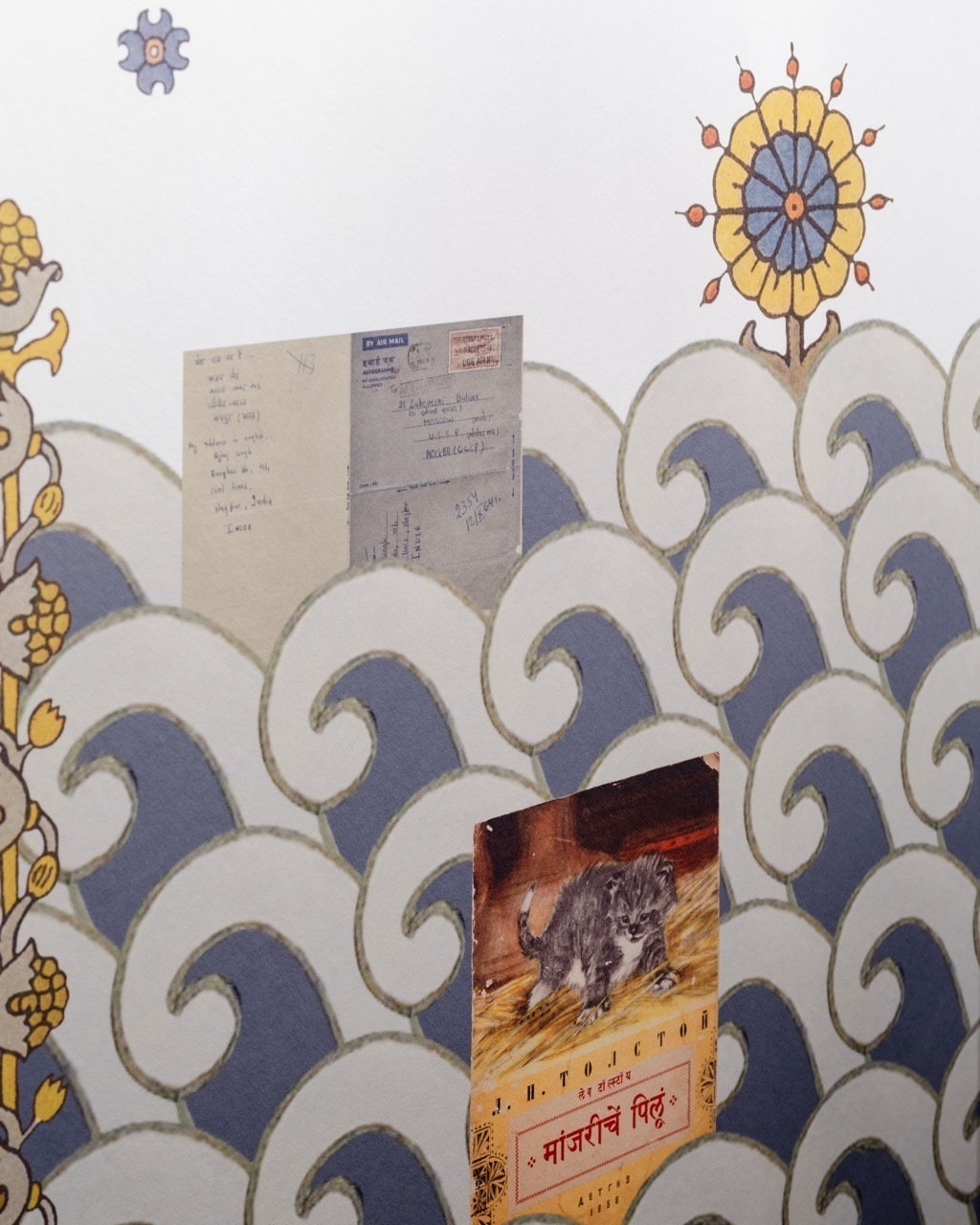
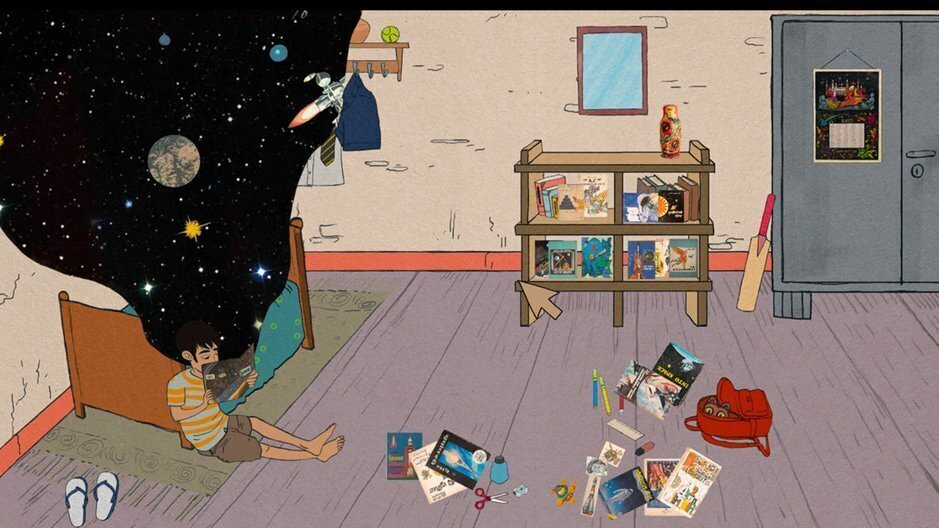
Nobody Knows for Certain and The Bride Who Could Not Stop Crying, developed with the support of Garage Field Research, grew out of Shafiq’s interest in Soviet book publishing in foreign languages, particularly those of the Indian subcontinent (Hindi, Bengali, Telugu, Malayalam, and others), where generations of readers and collectors grew up in the 1960s–1980s on illustrated Soviet fairy tales and popular science books for children. Having assembled a digital archive of such books and studied the history of the Soviet book export phenomenon, the artist came up with the idea of creating a digital work in the form of a narrative point-and-click game.
Within Nobody Knows for Certain, the story of Soviet book export to India is inseparable from the artist’s own fiction: the game features recognizable fairy-tale heroines, such as Baba Yaga and Princess Nesmeyana, alongside characters invented by the artist, including the Cat Without a Tail, Indian girl Katya, and the Empty Matryoshka. The visual style of each level references the aesthetic sources of Soviet children’s book illustrations: from the lubok folk tradition to avant-garde and constructivist imagery. For example, the large-scale animated map that allows players to move between different levels of the narrative is inspired by the tradition of lacquer miniatures.
In contrast to Nobody Knows for Certain’s visual complexity, The Bride Who Could Not Stop Crying is rendered in a more concise style, its two-dimensional world bringing together the aesthetics of early 8-bit video games with motifs of red-and-white embroidery. Objects decorated with such embroidery would traditionally form part of a bride’s dowry; this craft tradition has been preserved across many cultures, from Central and Eastern Europe to the Middle East. The mechanics of the single-player quest unfold through a first-person narrative: Shafiq’s protagonist is a grieving bride on her wedding day, whose fate is shaped through encounters and conversations with other heroines, while the player’s decisions guide her story toward one of several possible endings.
Playing time for Nobody Knows for Certain: 30–90 minutes
The game is available in Russian.
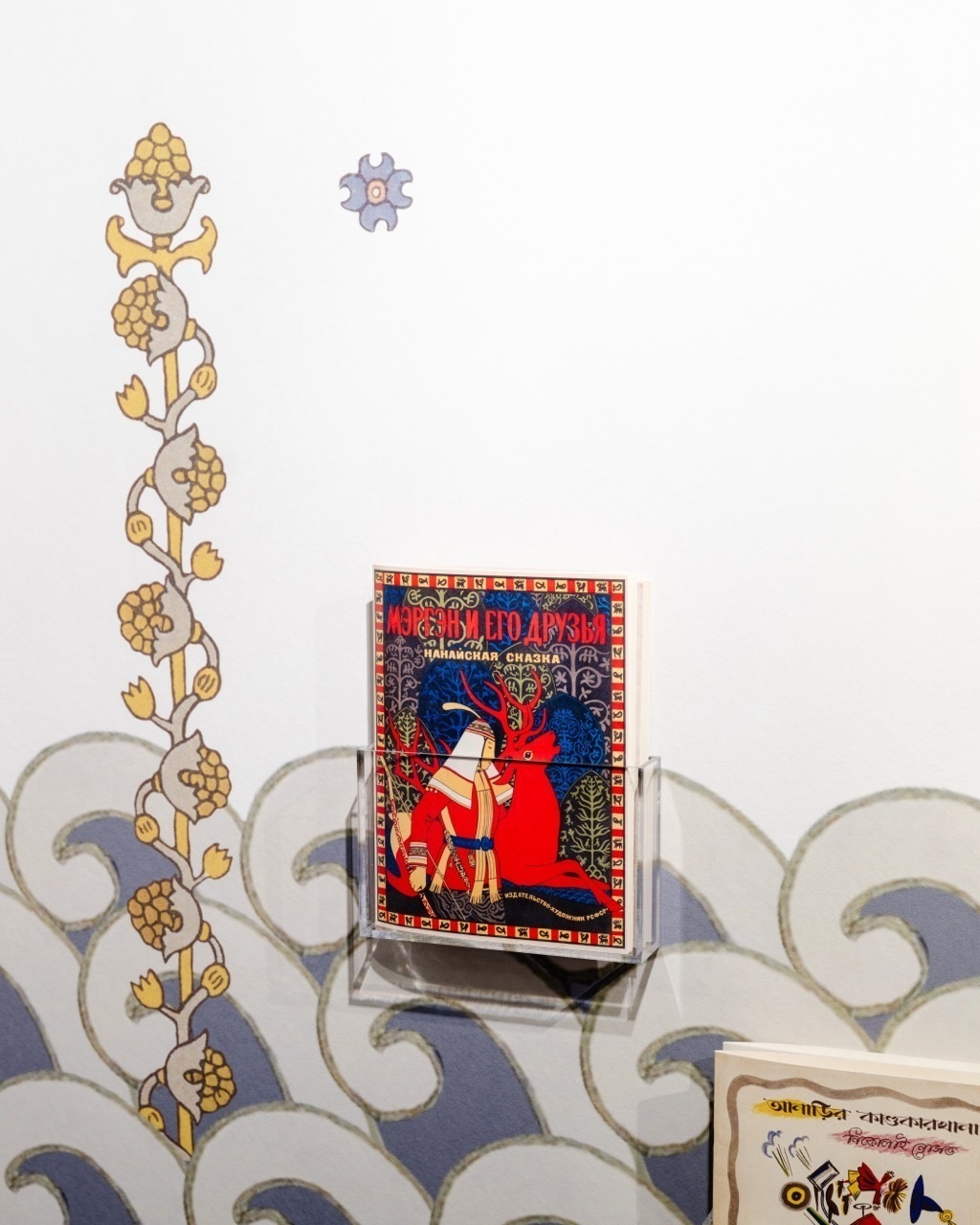
The installation is accompanied by children’s books in Hindi, Bengali, Urdu, and Russian.
Playing time for The Bride Who Could Not Stop Crying: 7–15 minutes
The game is available in English and accompanied by instructions in Russian.