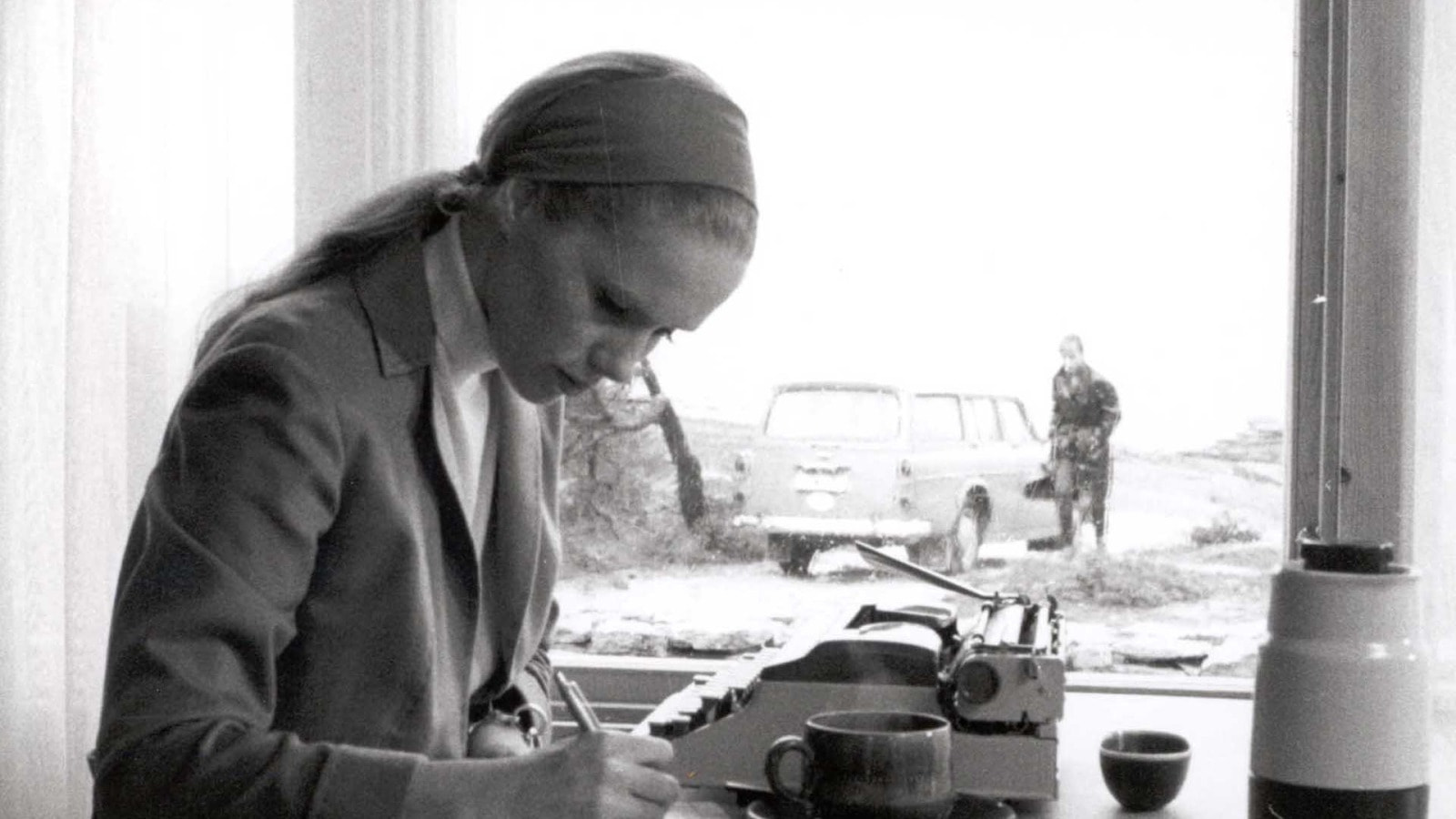
Famous actress Elisabet Vogler suddenly becomes silent in the middle of a performance and, refusing to speak to anyone, ends up in a psychiatric clinic.
The doctor insists that she is healthy and her silence is a rebellion against herself and human life in general. To bring her to her senses, he invites her to spend the summer in a country house under the supervision of a young nurse, Alma. Ingmar Bergman’s iconic film is a radical psychological drama about the limits of personality and freedom.
Imbued with confidence in the mysterious actress, Alma reveals her own secrets, fears, and dreams to her. She becomes more and more attached to Elisabet, while also losing touch with reality, turning the other person and her silence into a mirror for a deep projection of her own “I.”
A story of a relationship between two women, Persona takes place between dream and reality. Rather than evolving from a fixed point, the narrative does not even have an identifiable or reliable narrator. The boundaries between the two protagonists, their masks and identities are blurred, merging into each other, just as the faces of Alma and Elisabet merge into a single portrait.
Susan Sontag wrote that Persona is not just an example of an individual’s Jungian relationship with their self, in which the struggle with and the rejection of one’s nature ultimately leads to the loss of oneself. “The insufficiency of the clues Bergman has planted must be taken to indicate that he intends the film to remain partly encoded. The viewer can only move toward, but never achieve, certainty about the action.” At the same time, deeply modernist in its structure, Persona looks like a captivating crime drama played out by Bergman’s great actresses and muses, Liv Ullmann and Bibi Andersson.
The film will be screened in Swedish and English with Russian subtitles.
Persona
Dir. Ingmar Bergman
Sweden, 1966. 85 min. 18+